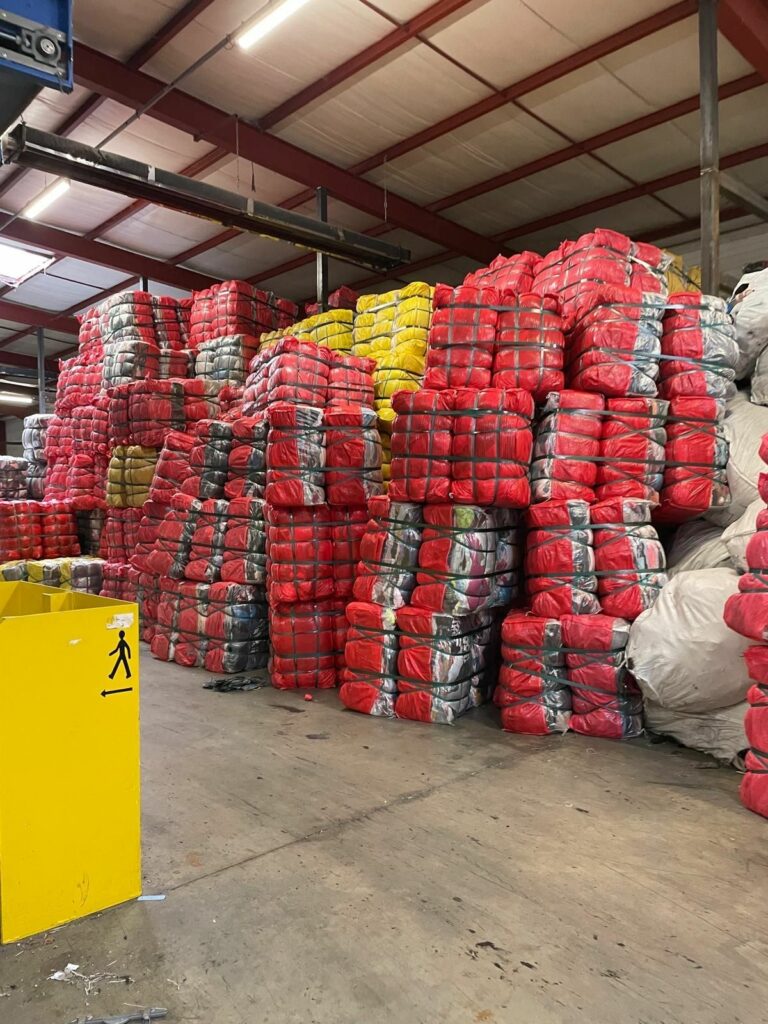
For several years, Ecollant, which became REC in late 2025, has been working with ALPES TLC on the collection and sorting of end-of-life textiles containing polyamide. This partnership is essential to better characterise textile waste streams, prepare materials and contribute to the development of an industrial recycling value chain for complex textiles, with the aim of collecting and recycling this waste.
A Long-Standing Collaboration with ALPES TLC to Collect and Recycle Textile Waste
In February 2025, we were delighted to meet again with the ALPES TLC teams, particularly Gauthier Mestrallet and Synergies TLC, long-standing partners of the Ecollant project. For several years, this collaboration has enabled us to work on developing and improving collection and sorting solutions for textiles containing polyamide.
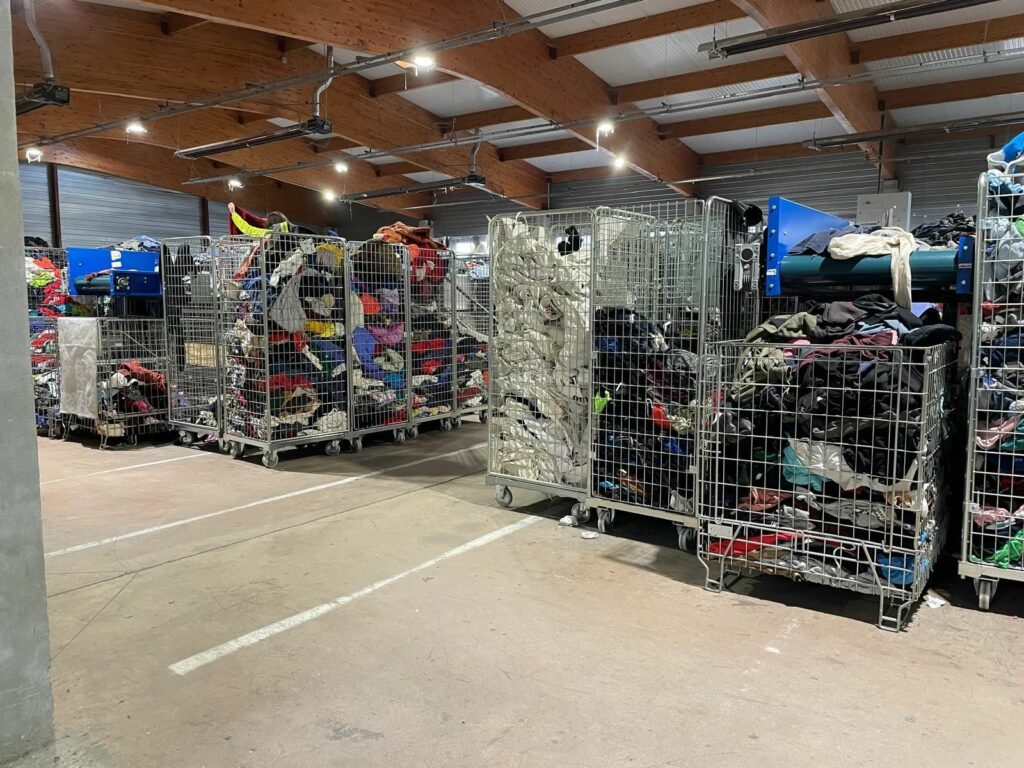
This approach addresses a key challenge in the development of textile recycling: before a material can be recycled, it must first be identified, collected and properly prepared. For REC, collection and sorting operators are therefore essential links in the value chain. They help us better understand available waste streams, their composition and characteristics, while contributing to directing textiles towards the most appropriate recovery pathways.
Why Are Collection and Sorting Essential for Polyamide Recycling ?
Recycling textiles containing polyamide begins well before the material transformation stage. First, we need access to sufficiently large, consistent, characterised and traceable waste streams.
This is particularly important for complex textiles, which can combine several fibers. Tights, hosiery, socks, lingerie and certain sportswear garments can contain polyamide combined with elastane. To develop an industrial recycling solution, it is therefore necessary to identify products containing polyamide and build material streams suited to the process.
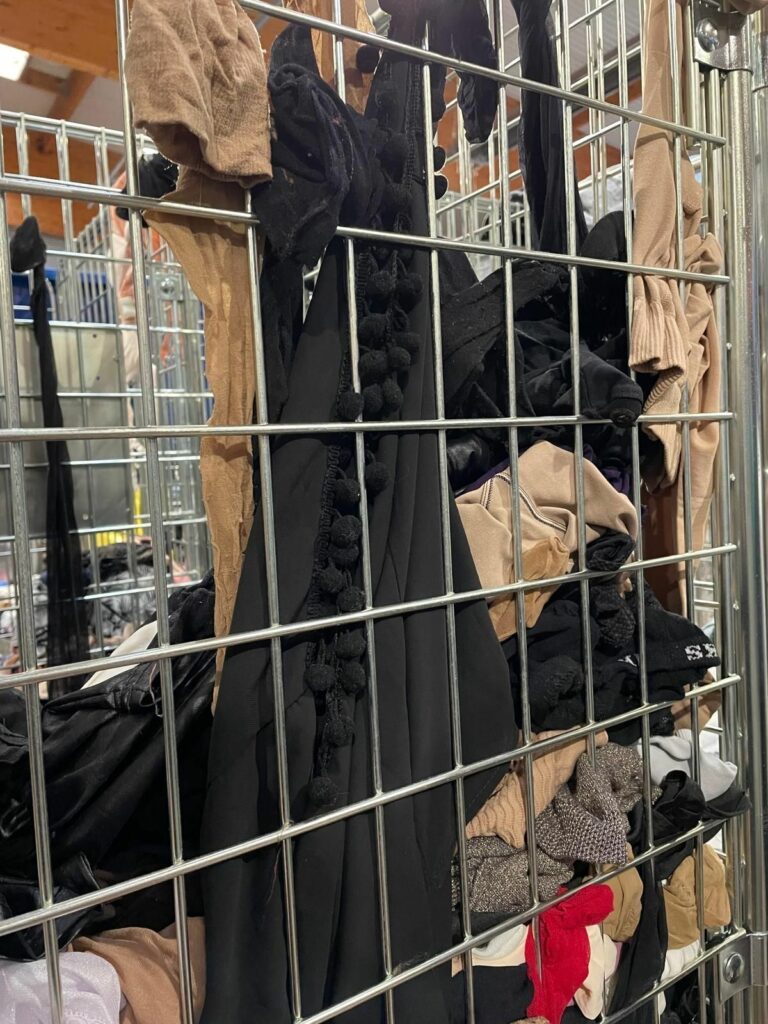
This is precisely one of the challenges REC is addressing with its collection and sorting partners.
Discover how REC organises the collection of textiles containing polyamide
What Does This Partnership Enable ?
A collaboration such as the one developed with ALPES TLC allows us to work on several key aspects of building a recycling value chain.
Accessing Volumes of Textiles Containing Polyamide
The first challenge is, of course, volume. Industrialising a recycling process requires sufficient quantities of raw material. End-of-life textiles containing polyamide therefore represent a strategic feedstock for REC. Progressively building these volumes helps prepare the conditions required to scale up our technology.
Better Understanding Textile Waste Streams
Each waste stream has its own characteristics. Material composition, proportion of polyamide, presence of other fibers, condition of the textile, colours, moisture and unwanted elements can all influence how the material needs to be prepared and processed.
The experience and feedback of collection and sorting teams are therefore particularly valuable. They enable REC to better understand the operational realities of textile waste streams and progressively adapt its industrial requirements.
Building Recycling-Ready Material Streams
Collection alone is not enough. For textiles to be recovered efficiently, they must also be sorted and prepared according to criteria compatible with the recycling technology. Collaboration between collectors, sorting operators and recyclers therefore makes it possible to progressively build more homogeneous and better-characterised material streams.
This organisation is essential for moving from a simple waste collection approach towards the preparation of secondary raw materials.
Complex Textiles: A Particular Challenge
Textiles made from multiple fibers represent one of the major challenges in textile recycling. In tights, for example, polyamide and elastane can be intimately combined in the form of extremely fine filaments. This structure makes separation particularly complex and limits the options offered by certain conventional technologies. At REC, this challenge represents one of the key technological barriers at the heart of our approach.
Our technology aims to recover the polyamide contained in complex textiles, regenerate it and produce recycled material for new industrial applications.
Learn more about polyamide recycling and complex textiles
A Partnership Built on Shared Values
Beyond the technical and operational aspects, this partnership is based on a shared ambition: to better direct end-of-life textiles towards specialised recovery pathways. Developing a circular economy requires bringing together complementary areas of expertise.
Collectors understand the waste streams. Sorting operators understand the materials and the realities on the ground. Recyclers develop the technologies needed to transform these materials. Industrial companies and manufacturers then create the outlets required for recycled materials. It is this complementarity that makes it possible to build a coherent value chain.
From Collection to Industrialisation
When this collaboration began, the project was still being developed under the name Ecollant and was in the technology development phase. Since then, the project has reached several new milestones.
Ecollant became REC in late 2025, and the company is now based in Joigny, where it is pursuing the industrialisation of its polyamide recycling technology.
However, collaboration with collection and sorting stakeholders remains essential. Moving to industrial scale requires sufficiently large and consistent material streams to supply future processing capacities. Collection is therefore an integral part of REC’s industrialisation strategy.
What’s Next ?
Our ambition remains clear: collect more in order to recycle more complex textiles containing polyamide. Increasing collection volumes will progressively support the industrial deployment of our technology and contribute to building a genuine polyamide recycling value chain. Achieving this scale-up requires us to continue and expand our collaborations with stakeholders involved in textile collection, sorting, preparation and recovery.
Every partnership contributes to building a more efficient value chain.
Building a New Textile Recycling Value Chain Together
Complex textile recycling cannot develop without collective action. Collect, sort, characterise, prepare, recycle and reintroduce materials into industry: every step matters.
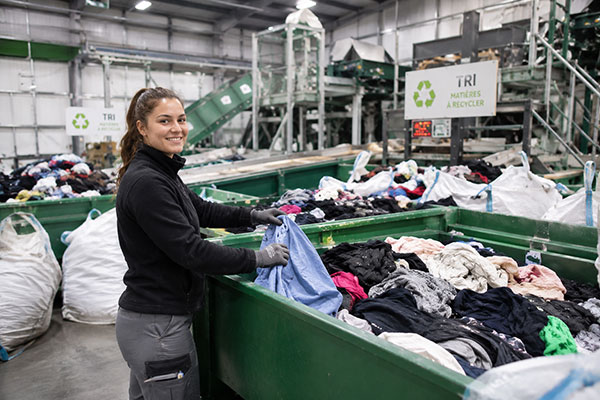
At REC, we are convinced that building an industrial polyamide recycling value chain relies as much on technological innovation as on the quality of the collaborations developed across the entire ecosystem. A huge thank you to the teams at ALPES TLC and Synergies TLC for their trust, commitment and contribution to developing new recovery solutions for end-of-life textiles.
Together, let’s continue transforming today’s textile waste into tomorrow’s industrial raw materials.