Planned obsolescence is often associated with electronic devices. Yet questions surrounding product lifespan, fashion, repairability and end-of-life also affect the textile industry. So, can we really talk about planned obsolescence in textiles? And what role can recycling play in addressing the growing volume of textile waste?
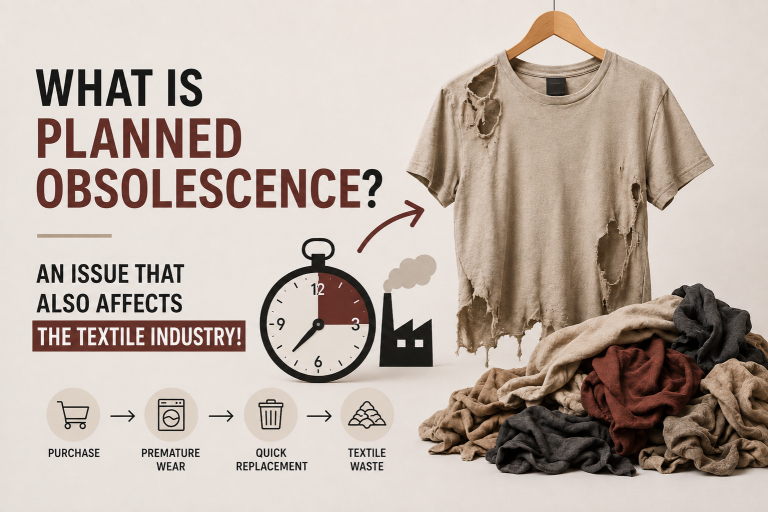
What Is Planned Obsolescence ?
Planned obsolescence refers, under French law, to techniques by which a manufacturer or distributor deliberately seeks to reduce a product’s lifespan in order to increase its replacement rate.
This should be distinguished from other forms of obsolescence, including functional obsolescence and obsolescence linked to changing consumer habits and preferences. It is therefore important to distinguish between planned obsolescence and the rapid replacement of products. In textiles, the situation is particularly complex. A garment’s lifespan can depend on its quality, care, repairability, style, price and the rapid evolution of fashion trends.
It is therefore more appropriate to discuss the lifespan of garments and textile replacement patterns, rather than claiming that all garments are deliberately designed to become unusable quickly.
Is There a Form of Obsolescence in Textiles ?
Even when it is not legally possible to describe a practice as planned obsolescence, several factors can contribute to shortening the period for which a garment is used.
Varying Quality and Durability
The quality of materials, yarns, construction and finishing obviously plays a role in a textile’s lifespan. A garment that wears out quickly, loses its properties or deteriorates after repeated washing may be replaced sooner than a more durable product.
The Constant Renewal of Fashion Trends
Fashion is another driver of replacement. A garment may still be perfectly functional but no longer match current tastes or trends. The French Ministry for Ecological Transition also distinguishes obsolescence resulting from changing consumer preferences from planned obsolescence in the legal sense.
Garments That Are Difficult to Repair
Product design also affects repairability. When a garment is difficult to disassemble, certain components are difficult to replace, or repair costs are too high compared with the product’s price, replacement may be preferred. Yet extending product lifespans, repairing and reusing products are all essential levers of the circular economy.
Textiles That Are Difficult to Recycle
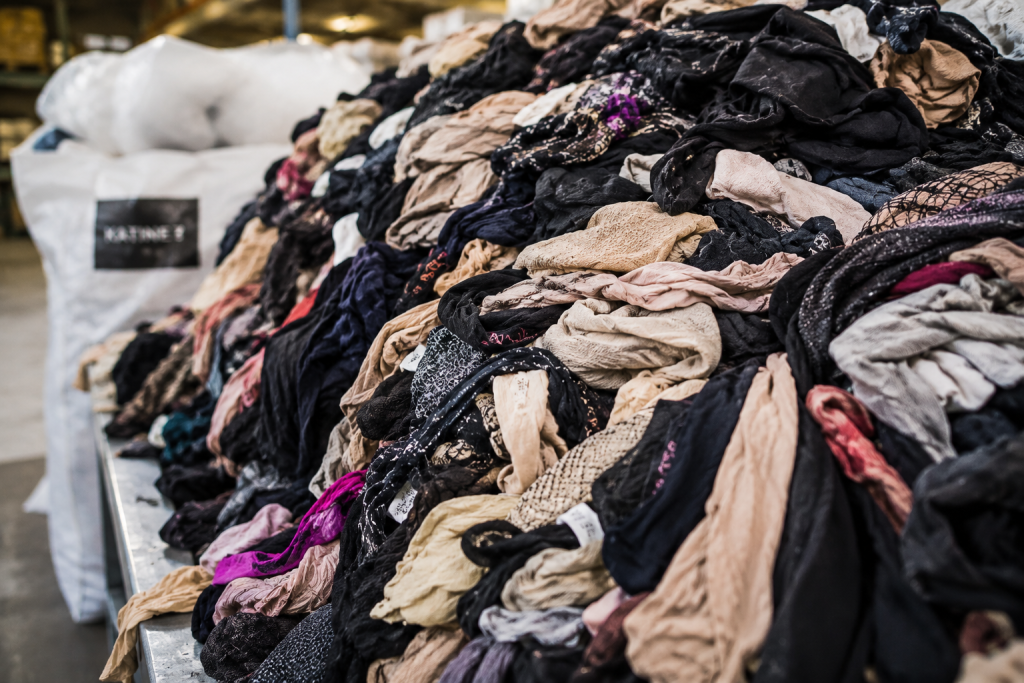
Finally, the composition of a textile can also make its end-of-life management more complex. Some garments combine several fibers, such as polyamide and elastane. These complex textiles can be particularly difficult to recycle because the different fibers are closely intertwined.
This is particularly true for products such as certain tights, hosiery, lingerie and sportswear. This complexity represents one of the technological challenges REC is working to address.
Why Is Textile End-of-Life an Environmental Challenge ?
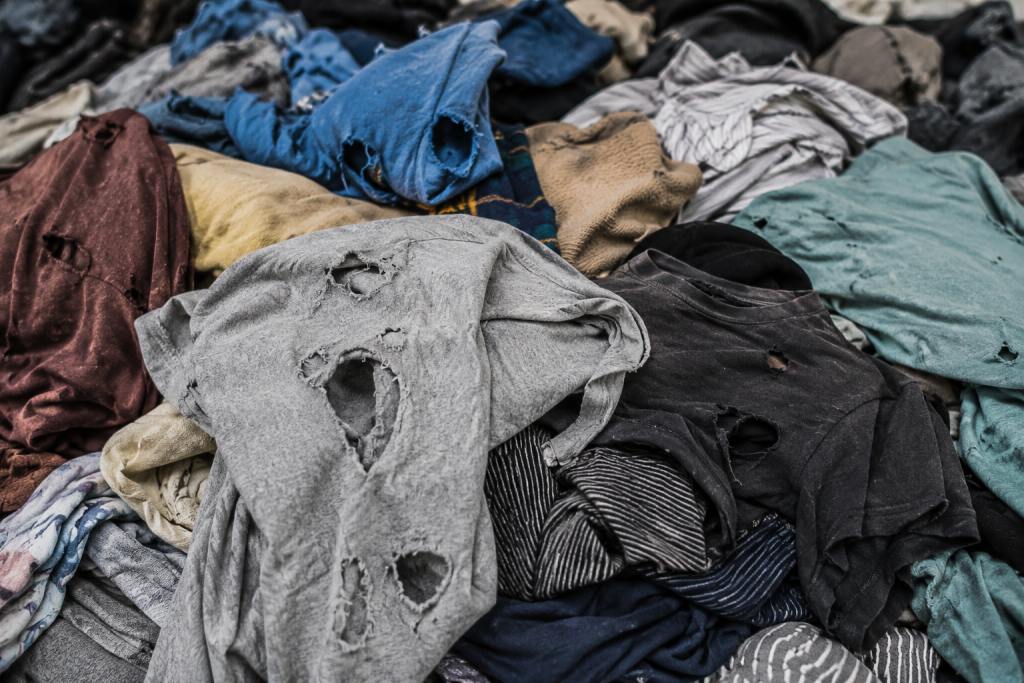
Extending the lifespan of a garment is obviously preferable to replacing it prematurely when it can still be used. But even when a textile genuinely reaches the end of its useful life, another question arises: What can we do with the material it contains?
In France, the Extended Producer Responsibility (EPR) scheme for textiles, household linen and footwear (TLC) aims to support the development of the circular economy by acting across the entire product lifecycle: eco-design, waste prevention, extending product lifespans and end-of-life management.
In 2024, 289,393 tonnes of TLC were collected in France, according to Refashion. The organisation also reports that 34.5% of collected items were directed towards recycling. These figures illustrate the scale of the challenge and the importance of improving material recovery solutions.
How Can Textiles Containing Polyamide Be Recycled ?
This is precisely the challenge REC is seeking to address. Formerly Ecollant, REC is developing a technology to recover and regenerate polyamide contained in complex textiles and materials. The objective is to transform waste that is currently difficult to recover into new recycled raw material for industry.
This approach is part of a circularity strategy: rather than considering end-of-life textiles solely as waste, the aim is to recover the materials they contain and give them a new purpose.
Discover REC’s polyamide recycling technology
Eco-Design: Thinking About Textiles from the Very Beginning
To improve textile circularity, the process must begin before the product is even manufactured. Eco-design involves considering durability, repairability, material composition and end-of-life from the earliest stages of product development.
A textile that is easier to identify, sort, disassemble and recycle can be easier to recover when it reaches the end of its useful life. The French TLC EPR scheme incorporates these different challenges into its organisation and objectives.
For REC, the challenge is complementary: developing recycling solutions capable of recovering textiles that remain difficult to process despite advances in eco-design.
REC’s Commitment: Giving Polyamide a New Life
Since our beginnings under the name Ecollant, which became REC in late 2025, we have been working on a specific challenge: recovering and regenerating polyamide contained in complex textiles. Our objective is to contribute to creating a new industrial resource from materials that already exist.
Today, REC is pursuing the industrialisation of this technology from its site in Joigny, with the ambition of developing a value chain capable of transforming polyamide-containing waste into recycled raw materials. This approach does not claim to solve all the challenges facing the textile industry on its own.
It represents one additional building block in the development of a more circular textile economy, in which materials are used for longer, reused whenever possible and recycled when they reach the end of their useful life.
Giving polyamide a new life, so that today’s textile waste can become tomorrow’s raw material.