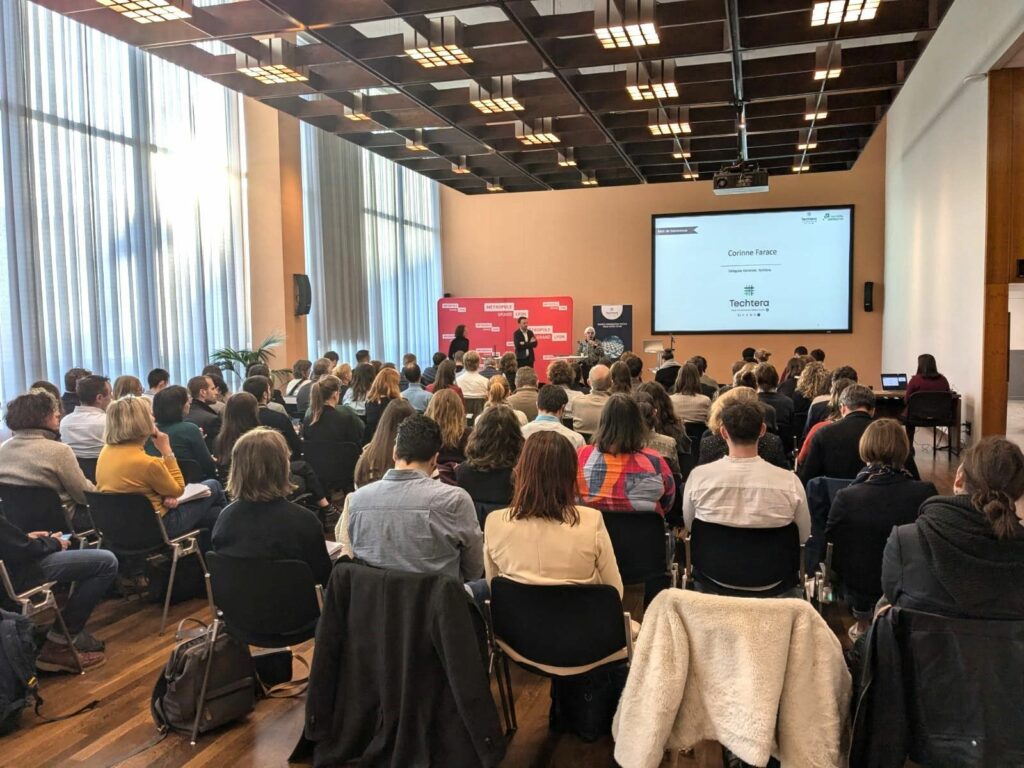
In December 2024, Ecollant, which became REC in 2026, took part in a day dedicated to the recovery of textile production offcuts and dormant stock from the textile industry. Organised by TECHTERA together with the Lyon Metropolitan Area and Lyon Pacte PME Auvergne-Rhône-Alpes, the event provided an opportunity to discuss a key challenge: how can we better identify, direct and recover textile waste streams that remain underused today?
Recovering Pre-consumer Textile Waste and Dormant Stock
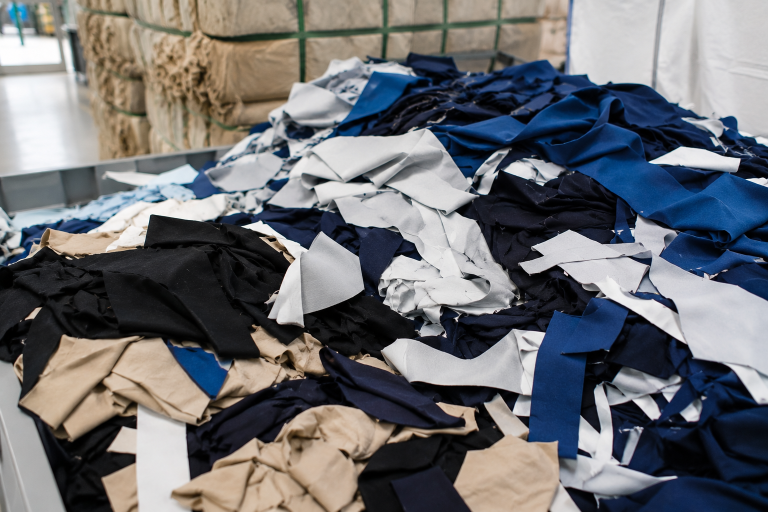
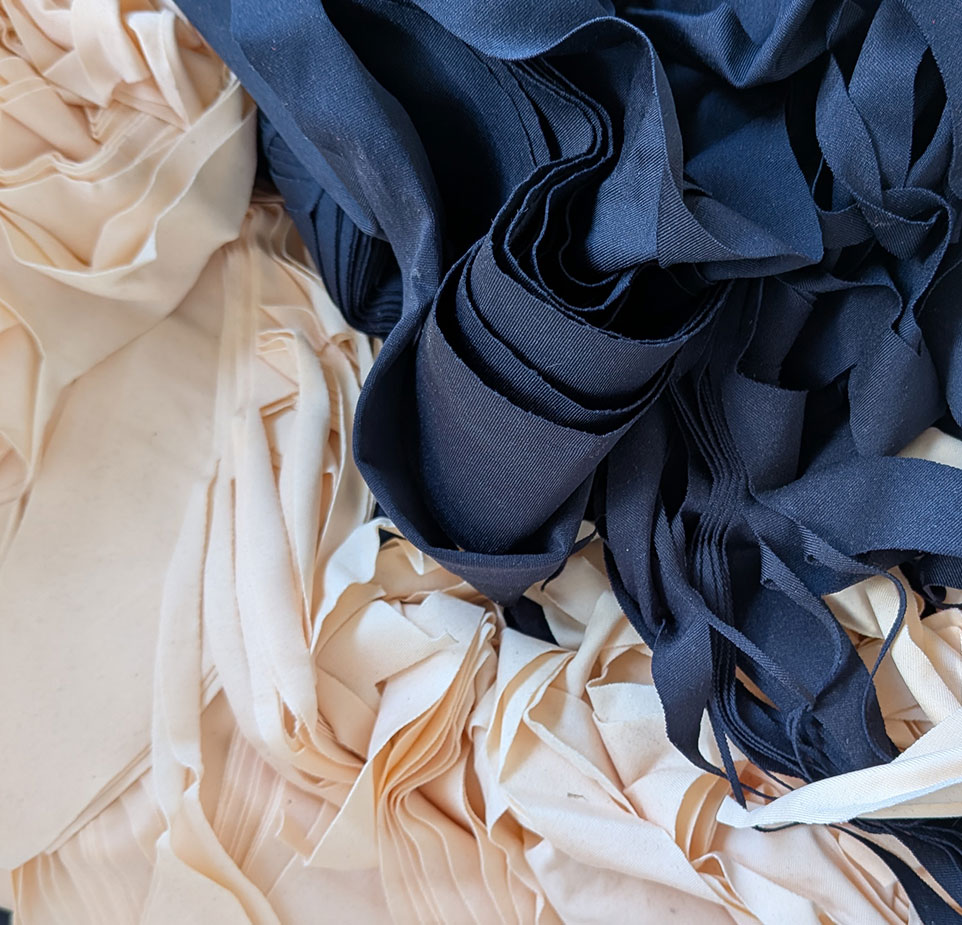
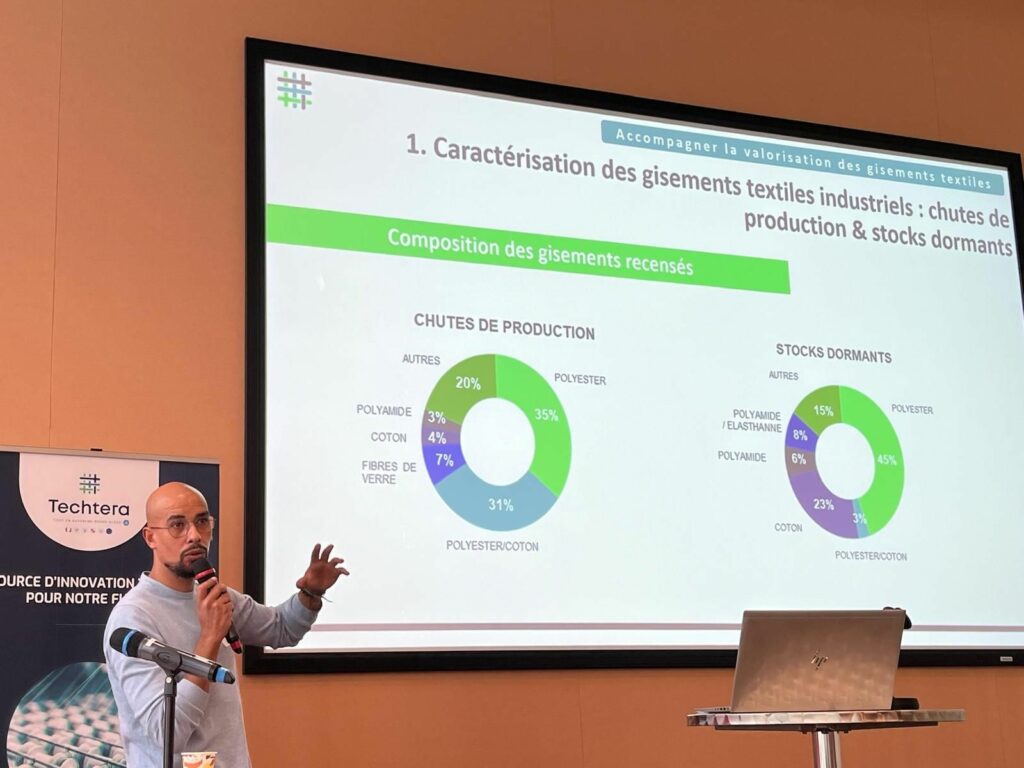
Production offcuts, manufacturing defects, surplus and dormant stock represent significant volumes of textile materials for which suitable recovery solutions have not always been identified. These materials differ from used clothing collected from consumers: they fall into the category of pre-consumer textile waste.
For REC, these waste streams are particularly interesting when they contain polyamide.
In December 2024, we took part in a day organised by TECHTERA, the competitiveness cluster dedicated to the textile industry, in collaboration with the Lyon Metropolitan Area and Lyon Pacte PME Auvergne-Rhône-Alpes. The event brought together various stakeholders from the industry around a shared objective: gaining a better understanding of available waste streams and identifying solutions to give these materials a new value.
What Is Pre-Consumer Textile Waste ?
Pre-consumer textile waste refers to textile materials or products that have not yet been used by consumers. This can include:
- production offcuts;
- manufacturing defects;
- leftover rolls;
- unused samples;
- unsold products;
- production surpluses;
- dormant stock.
By contrast, post-consumer textiles are products that have been used and subsequently discarded or donated by consumers, such as end-of-life tights, lingerie or sportswear. Today, REC is working with both categories of waste streams, with the objective of recovering textiles containing polyamide and directing them towards an appropriate recovery solution.
Discover REC’s collection of textiles containing polyamide
From Pre-Consumer Waste to Secondary Raw Material
For REC, recovering pre-consumer textile waste is directly connected to our strategy of building a secondary raw material supply. Production offcuts and dormant stock containing polyamide can provide a complementary source of raw material alongside post-consumer textiles.
REC’s collection strategy now clearly distinguishes between these two categories and includes several sourcing channels: sorting centres, B2B partnerships with yarn and textile producers, direct contributions from brands and manufacturers through their production offcuts, as well as dedicated collection schemes. Diversifying these sources helps secure the feedstock required to develop an industrial polyamide recycling value chain.
Recycling Objective: Connecting Stakeholders More Effectively
The event also provided an opportunity to meet stakeholders from across the value chain:
- holders of dormant stock;
- industrial companies generating production offcuts;
- collectors;
- sorting operators;
- start-ups specialising in material recovery;
- companies developing new materials.
We particularly enjoyed exchanging with Recyc’Elit and many other stakeholders committed to transforming the textile industry. These meetings help us better understand the constraints faced by each stakeholder and identify potential synergies around textile recovery.
For REC, the objective is to help create connections between material owners and the industries capable of giving these materials a new life.
Scale-Up Objective: Preparing for Industrial Volumes
Recovering offcuts and dormant stock is not only an environmental challenge. It is also an industrial one. To develop a large-scale recycling technology, we need access to sufficient volumes of raw material, while also ensuring quality, consistency and traceability.
This is why collection and waste-stream preparation are directly connected to REC’s industrialisation strategy. Our objective is to progressively build a supply network capable of supporting our scale-up and, ultimately, our industrial polyamide recycling capacity.
From Ecollant’s Early Experiments to REC’s Industrialisation
This December 2024 event took place during an important period in Ecollant’s development. Since then, the company has reached several new milestones.
Ecollant became REC in 2026 and is now based in Joigny, where the company is pursuing the industrialisation of its polyamide recycling technology. The work carried out on collection and waste-stream characterisation remains central to this development journey.
Today, REC is seeking to recover different types of polyamide-containing waste, whether pre-consumer or post-consumer, and transform them into new industrial resources.
Towards a More Circular Textile Economy
Every production offcut recovered, every dormant stock reintegrated into a new value chain and every used textile correctly directed towards recycling helps reduce material waste. But to go further, we need to continue mapping available waste streams, structuring material flows, improving traceability and developing collaboration across the value chain.
This collective approach will help accelerate the transition towards a more circular textile industry.
At REC, our ambition is clear: to turn polyamide-containing waste into a new industrial resource.
Today’s waste can become tomorrow’s raw material.
Thank You to the Organisers and Industry Stakeholders
A big thank you to TECHTERA, the Lyon Metropolitan Area and Lyon Pacte PME Auvergne-Rhône-Alpes for organising this event and for their commitment to recovering textile resources.
Thank you also to Corinne Farace, Isabelle Dufour-Daries and Solène Doublier for the quality of the discussions and their commitment to transforming the textile industry sustainably. We will continue exploring synergies to better recover industrial textile waste streams and, at our level, contribute to a more circular economy.
Production offcuts, dormant stock or end-of-life textiles: whenever a material can still be recovered, it should not be considered simply as waste.