Since the early days of Ecollant, which became REC in late 2025, the collection of end-of-life textiles containing polyamide has been an essential part of our recycling approach. Let’s take a look back at our partnership with Provence TLC, a specialist in the collection, sorting and recovery of TLC (Textiles, Household Linen and Footwear), and at the first nylon waste streams studied by REC.
A partnership to advance polyamide recycling
Several years ago, Ecollant partnered with Provence TLC to explore and better characterise end-of-life textile waste streams containing polyamide. Provence TLC supports stakeholders across the textile industry with their TLC collection, sorting and recovery projects. Its expertise in processing used textiles made it a particularly relevant partner for the first experiments carried out by Ecollant. Since the beginning of this collaboration, we have been working on the assessment and characterisation of end-of-life textile waste streams, with one initial case study focusing on hosiery, socks and tights. These textiles are particularly interesting for polyamide recycling: they represent a relatively homogeneous waste stream and can contain a significant proportion of nylon, with approximately 85% polyamide on average in the waste stream studied.
This initial experiment helped us gain a better understanding of the characteristics of available textile waste and the conditions required to prepare it for recycling.
12 tonnes of textiles collected: an important milestone
As our partnership developed, the volumes collected gradually increased. The historical data from this experiment illustrate this growth:
- 2021: 900 kg collected
- 2022: 3 tonnes
- 2023: 12 tonnes
With 12 tonnes of used textiles collected, this milestone represented a new record for Ecollant at the time and confirmed the potential for developing the collection of textiles containing polyamide. Today, this momentum is part of a much broader collection strategy at REC. Our aim is to progressively increase polyamide collection volumes to support the scale-up of our industrial recycling activities.
Collection is therefore far more than a peripheral activity: it is the first step in the polyamide recovery value chain.
Without an available and properly characterised secondary raw material stream, it is not possible to develop an industrial polyamide recycling value chain.
Behind the scenes at a textile sorting centre
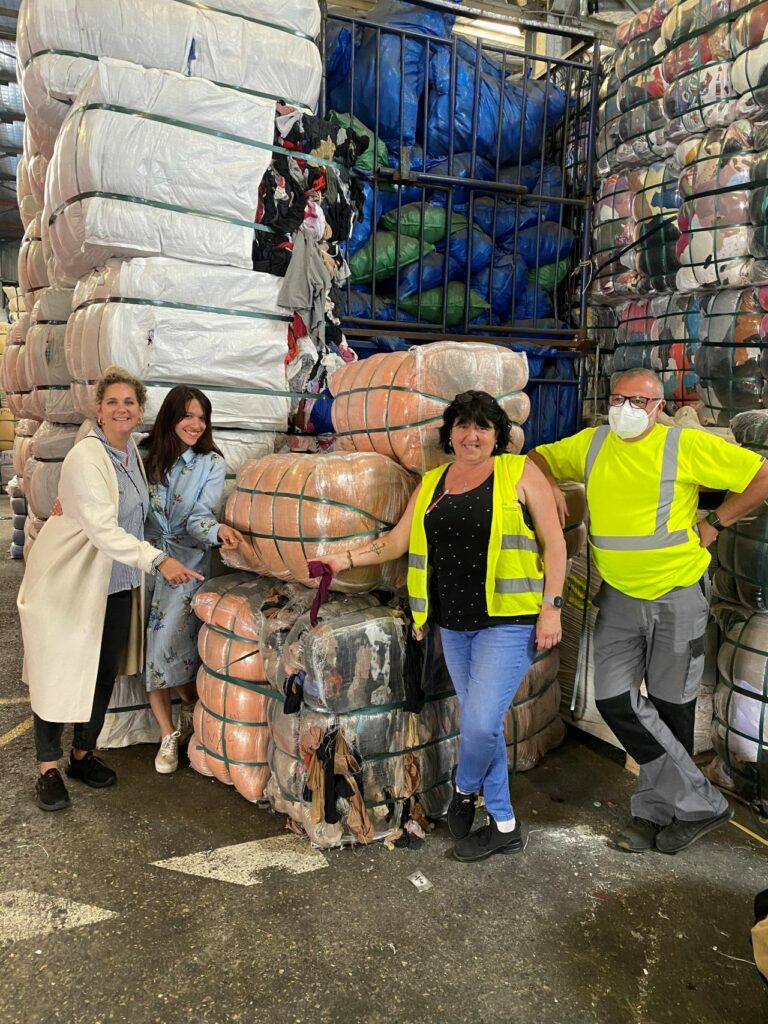
To mark this stage of our partnership, the Ecollant teams travelled to Vitrolles, to the heart of the Provence TLC sorting centre. The visit provided an opportunity to meet the teams and gain a better understanding of the challenges they face every day when sorting end-of-life textiles, as well as the specific characteristics of the waste stream targeted by Ecollant. This time, we even stepped directly onto the sorting line to take part in selecting items containing nylon and polyamide. It was a particularly valuable experience, helping us better understand the realities on the ground and the many steps required before a textile can become a raw material suitable for recycling.
The work carried out by sorting teams is essential: identifying materials, separating different textile categories and preparing sufficiently homogeneous waste streams enables recyclers to work with materials that are suited to their processes.
Why are tights difficult to recycle?
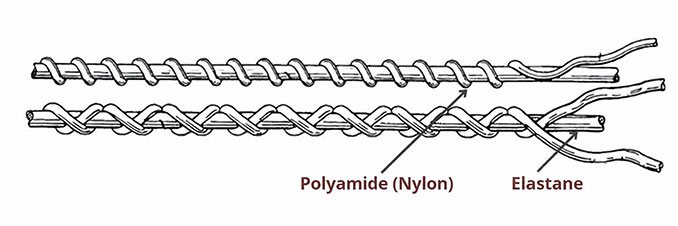
Tights, hosiery and certain nylon-containing textiles were among REC’s first case studies. Why start with these products? Because they perfectly illustrate the technological challenge posed by complex textiles. A pair of tights can primarily combine two materials: polyamide and elastane. These fibers are used in the form of extremely fine filaments that are tightly intertwined. This structure, notably known as covered yarn construction, provides the properties required for the product — strength, elasticity and comfort. However, it also makes fiber separation particularly complex.
This is one of the reasons why conventional mechanical recycling technologies reach their limits when dealing with certain textiles made from multiple fibers.
At REC, this technological challenge is precisely at the heart of our expertise: developing a solution to separate and recover the polyamide contained in complex materials, so that it can be regenerated and transformed into new raw material.
Discover our polyamide recycling technology and our work on complex textiles.
Blended-fiber textiles: a major recycling challenge
Complex or blended-fiber textiles represent a major challenge for the development of a truly circular economy. In the study that served as the basis for this experiment, hosiery and tights accounted for 47.4% of the collected waste stream after three experimental campaigns, according to data from the ReFashion study. This type of data helps explain why these products represented such a relevant case study for Ecollant’s initial research.
Today, textiles combining multiple fibers remain among the materials on which REC focuses its expertise.
What should you do with your used tights and textiles?
As a consumer, it is important not to dispose of used clothing and textiles with household waste when they can be placed in a dedicated collection stream. Tights, socks, underwear and other used textiles can be deposited at designated TLC collection points, in accordance with the collection guidelines. These textiles can then be collected, sorted and directed towards the appropriate available recovery solutions.
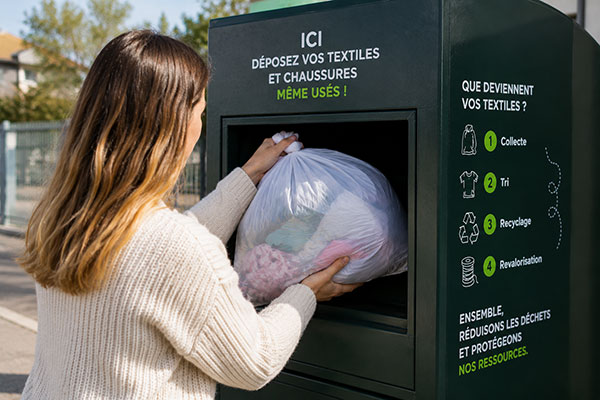
For REC, these simple actions also contribute to building the secondary raw material streams needed to develop new recycling solutions.
Learn more about REC’s collection of textiles containing polyamide.
From collection to recycled raw material
Collection is therefore much more than a logistical step. It enables REC to:
- identify waste streams containing polyamide;
- characterise their composition;
- work with material streams suited to our recycling technology;
- improve material traceability;
- progressively build stocks of secondary raw materials;
- prepare for the industrial scale-up of polyamide recycling.
Today, REC organises collection through a range of channels, including partnerships with sorting centres, collaborations with textile producers and industry stakeholders, contributions from brands and manufacturers, as well as dedicated programmes with companies and institutions.
This organisation is essential to progressively move from an experimental approach towards a fully industrial polyamide recycling value chain.
Thank you to Provence TLC and all the sorting teams
We would like to thank Provence TLC for its trust and commitment during the early stages of this journey. A special thank you also goes to Zeynep Gules and all the teams working on the ground, who sort and recover TLC every day. Their expertise, commitment and knowledge of materials are essential to building new recycling value chains.
From collection to recycling, every step matters in transforming today’s waste into tomorrow’s raw materials.