How can a process developed in the laboratory be transformed into a technology capable of operating at industrial scale? For a Deeptech company like REC, the industrial pilot is an essential step. It makes it possible to test the process at an intermediate scale, consolidate its performance and prepare for its industrial deployment in the recycling of complex textiles containing polyamide.
2026 update: This article, originally published in March 2025 under the name Ecollant, is part of the journey that led to the creation of REC and its industrial development in Joigny.
From Laboratory to Industrial Pilot: Why Scale Up ?
Developing a technology in the laboratory and making it work in an industrial environment are two very different stages.
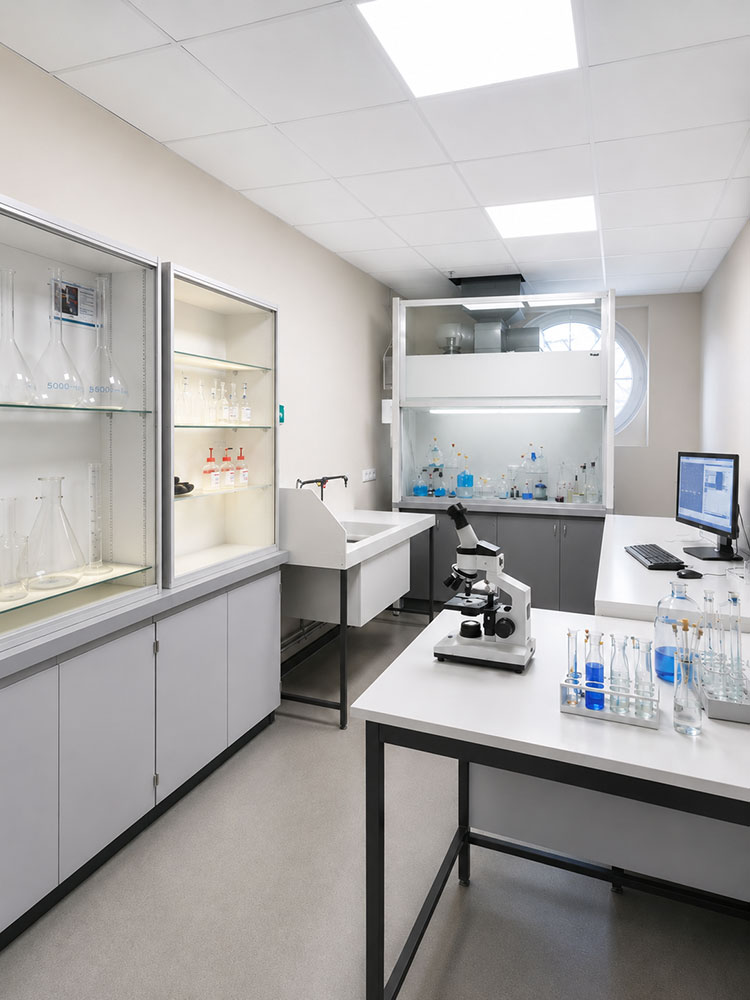
At laboratory scale, it is possible to work with limited quantities of material and precisely control many parameters.
At industrial scale, volumes increase, equipment changes, material flows become more complex and new constraints emerge.
This is precisely where the industrial pilot comes into play. The pilot represents an intermediate stage between laboratory development and industrial production. It makes it possible to test the process with larger volumes and under conditions that progressively approach those of a future industrial facility. For polyamide recycling and complex textiles, this stage is particularly important.
What Is an Industrial Pilot ?
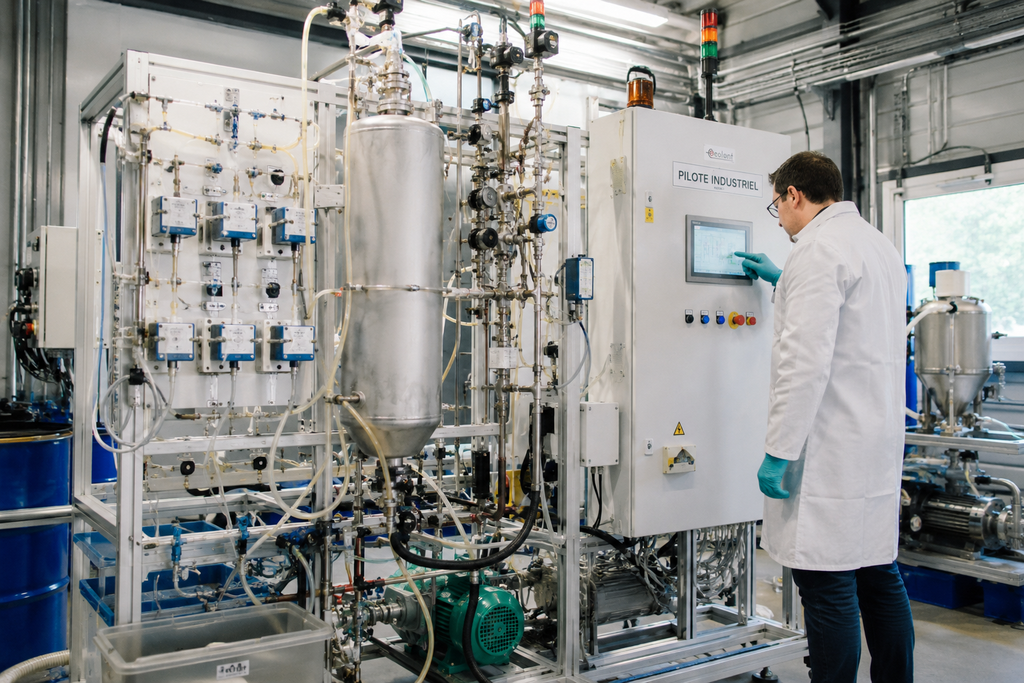
An industrial pilot is a facility or set of equipment used to test and validate a process at an intermediate scale between the laboratory and full-scale industrial production. Its purpose is notably to verify that the process continues to perform effectively as volumes increase.
It makes it possible to study:
- process stability;
- reproducibility;
- yields;
- quality of the material produced;
- operating parameters;
- equipment requirements;
- resource consumption;
- operating costs;
- maintenance constraints;
- material flow management.
The pilot therefore generates essential data for the design and sizing of a future industrial facility. Recycling complex textiles presents specific challenges.
Why Is the Pilot Strategic for Polyamide Recycling ?
The materials to be processed may combine several fibers, particularly polyamide and elastane. The characteristics of the feedstock can also vary depending on its origin, composition and condition. Scaling up must therefore make it possible to verify that the process remains robust despite these variations. The pilot makes it possible, in particular, to observe how the process behaves as volumes increase and to better understand the interactions between the different stages of treatment.
Discover REC’s polyamide recycling technology
A Project at the Crossroads of Deeptech, Recycling and Industry
Developing an industrial pilot is particularly complex when it involves a breakthrough technology. Several areas must be mastered simultaneously:
- science, to understand and optimise the process;
- technology, to design the equipment;
- engineering, to manage the scale-up;
- industry, to prepare for production;
- economics, to build a viable business model;
- environment, to manage impacts;
- regulation, to ensure compliance of future facilities.
This combination of expertise is characteristic of industrial Deeptech projects.
A Step, Not the Final Goal
It is important to remember that the pilot is not the ultimate objective. It is a risk-reduction and learning stage before industrialisation. Each test campaign generates new data, improves our understanding of the process and helps identify the necessary improvements. This step-by-step progression helps reduce risks and build a more robust industrial technology.
Building a Genuine Industrial Value Chain
Developing a recycling technology cannot be separated from building the entire value chain around it. For polyamide recycling to operate at large scale, we need:
- sufficient textile feedstock;
- properly sorted and prepared material streams;
- suitable equipment;
- industrial processing capacity;
- outlets for the recycled material;
- industrial partners;
- customers able to incorporate the material into their products.
The pilot therefore also helps prepare this collective scale-up.
From Kilograms to Tonnes: Changing Scale
Scaling up is one of the major challenges facing any industrial technology. Moving from laboratory quantities to several tonnes means transforming a scientific innovation into a reproducible industrial process. This transformation lies at the heart of REC’s approach.
Our ambition is to contribute to building a new industrial value chain capable of recovering the material value contained in complex textiles and making recycled polyamide a resource for industry. The industrial pilot is therefore a particularly important milestone: it is the point at which the technology truly begins to confront the realities of industrial operations.
Transforming an innovation into an industrial solution means precisely this: learning, measuring, optimising and repeating until a robust and reproducible process is achieved. 🚀