What if the complex textiles we consider waste today could become a new resource for industry tomorrow?
This is the ambition behind REC : polyamide recycling.
Recycling complex textiles is currently a major challenge in developing a more circular economy. These products can still contain materials with significant industrial value, but their composition, often made up of several fibres that are intimately combined, makes their recovery particularly complex.
At REC, we are developing an industrial technology dedicated to the recovery and regeneration of polyamide contained in complex textiles and materials. To explain our approach, our technology and our ambition in a simple and accessible way, we have created a new motion design presentation film.
🎥 Discover REC’s presentation video and take a closer look at our approach
Why focus on polyamide?
Also known as nylon, polyamide is widely used in textiles and in many industrial applications. It can be found in tights, lingerie, sportswear and technical textiles, as well as in a variety of industrial materials and products.

When a product reaches the end of its life, however, the polyamide it contains has not necessarily lost its value.
The real challenge is being able to recover this material when it is combined with other fibres. This is particularly true for textiles combining polyamide and elastane.
This combination is essential for achieving certain properties in the finished product — elasticity, comfort, strength and performance — but it makes separation and recovery at the end of life considerably more difficult.
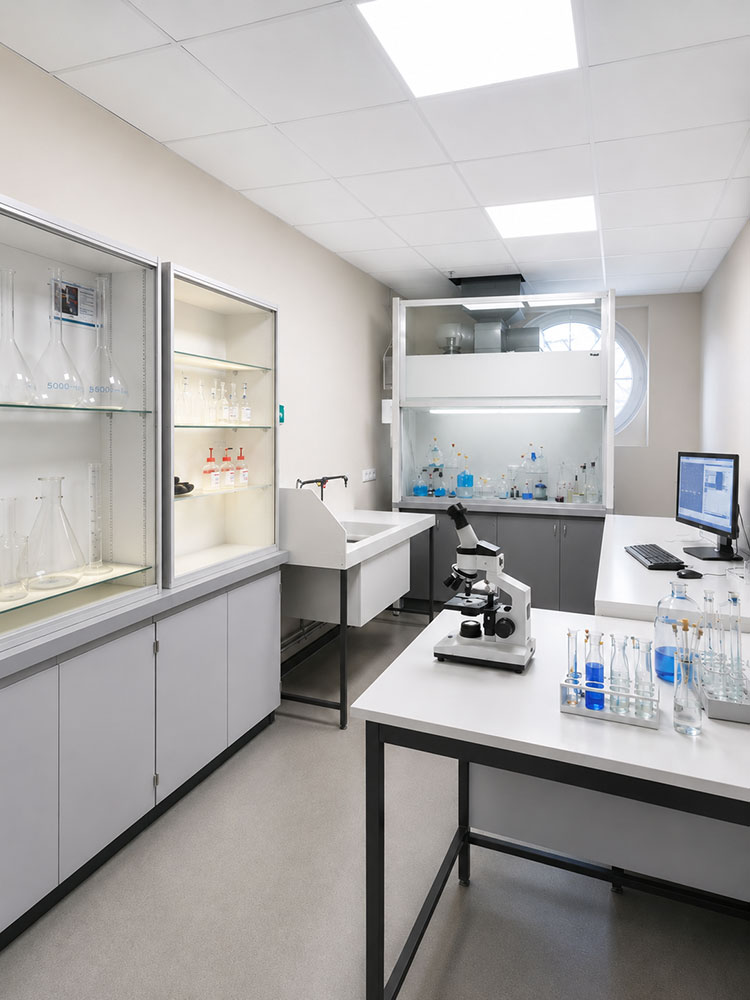
This is precisely the challenge on which REC is developing its expertise through our new REC R&D laboratory in Joigny.
A technology designed to recover the material
REC’s ambition is to enable the recovery and regeneration of polyamide contained in complex textiles and materials. Our technology is designed to separate polyamide from other fibres in order to recover the material and transform it into recycled polyamide for new industrial applications.
One point is essential: REC does not depolymerise the polyamide.
The objective is to preserve the molecular structure of the material in order to retain as much of its value as possible and enable it to enter a new value chain. The approach is based on a genuine circular loop : End-of-life textile → polyamide recovery → regeneration → recycled polyamide → new industrial application
In other words, it is not simply about treating waste. It is about recovering a material that has already been produced and enabling it to begin a new industrial cycle.
Discover why textiles containing polyamide are difficult to recycle
A film to share our vision
Because a technology can be complex to explain, we chose to present it in a different way.
Our new motion design film provides an introduction to:
- the challenge of recycling complex textiles;
- the specific challenge of polyamide;
- the approach developed by REC;
- our vision of circularity;
- our industrial ambition.
The video is intentionally simple, educational and concise. It is designed to explain our approach without claiming to provide an exhaustive presentation of all the technical characteristics of the process.
We would like to thank Olivier Coulon for creating this motion design and for successfully bringing our mission, vision and ambition to life.
Turning textile waste into a resource
Behind the development of this technology lies a strong conviction: today’s textile waste can become tomorrow’s raw material. Provided, of course, that the technologies and value chains needed to recover its value are developed.
Polyamide recycling can therefore contribute to:
- preserving resources;
- reducing reliance on virgin raw materials;
- developing new secondary raw materials;
- recovering complex textiles that are currently difficult to recycle;
- creating new circular loops;
- contributing to the reindustrialisation of recycling value chains in France and Europe.
REC’s ambition is to help change the way we look at textile waste.
The end of a textile’s life does not necessarily mean the end of the material it contains
When reuse or re-use is no longer possible, recycling can enable this material to be recovered and given a new life. This is the vision we want to share through our film.
Making recycled polyamide a new resource for industry.
That is REC’s ambition. ♻️
Discover REC’s polyamide recycling technology