In January 2025, Ecollant was entering a pivotal year for the development of its polyamide recycling technology. The objective at the time was to take a new step towards scale-up and industrialisation. One year later, Ecollant had become REC and was continuing this journey from its industrial site in Joigny.
2026 update: This article looks back at the ambitions set by Ecollant at the beginning of 2025 and at an important stage in the journey that has since led to REC.
2025: The Year Innovation Meets Action
As we closed the chapter on 2024, a year full of progress, we entered 2025 with a clear ambition: to take our polyamide recycling technology to the next level. After several years of research, experimentation, optimisation and collaboration with our ecosystem, we were preparing for a crucial stage in our development: the scale-up of our process and preparation for its industrial deployment.
For an industrial Deeptech company, moving from the laboratory to industry is a major milestone. It is no longer enough to demonstrate that a technology works. It must also become robust, reproducible, scalable and compatible with the requirements of future industrial production.
This was precisely the challenge we were taking on in 2025.
Our Ambition: Developing Circular Polyamide Recycling
Since Ecollant was founded in 2019, our objective has remained the same: contributing to the recovery of polyamide-containing textiles, particularly those made from multiple fibers. Some textiles, such as tights, lingerie and certain sportswear garments, combine polyamide and elastane. These complex textiles are particularly difficult to recycle using conventional processes.
Our work therefore focuses on developing a technology capable of recovering and regenerating the polyamide contained in these complex materials, in order to produce recycled material that can be reintroduced into new industrial applications.
Discover REC’s polyamide recycling technology
Why Scale Up to an Industrial Level ?
The development of a recycling technology cannot remain limited to laboratory scale. To genuinely contribute to transforming the textile industry, we need to be able to process significant volumes of end-of-life materials and produce recycled material with the quality and consistency required by industrial applications.
Scale-up is therefore an essential intermediate stage.
It enables us to:
- progressively increase the volumes processed;
- consolidate process parameters;
- verify reproducibility;
- characterise the resulting material;
- identify the equipment required;
- prepare the sizing of future industrial facilities.
In 2025, this was the transition we were preparing for.
A Year of Technical and Human Challenges
Scaling up an industrial Deeptech technology is not based solely on the technology itself. It also requires complementary expertise and a strong ecosystem around the project.
Our teams and partners were therefore fully committed to moving the project forward. Research, process development, engineering, material characterisation, collection, sorting, industrial partnerships and scale-up preparation: every area of expertise plays a role in building a polyamide recycling value chain.
This collective approach is essential to progressively transform a technological innovation into an industrial solution.
A Raw Material That Already Exists
Our approach is based on a simple conviction: Why continue to rely solely on virgin raw materials when materials already exist in products that have reached the end of their useful life?
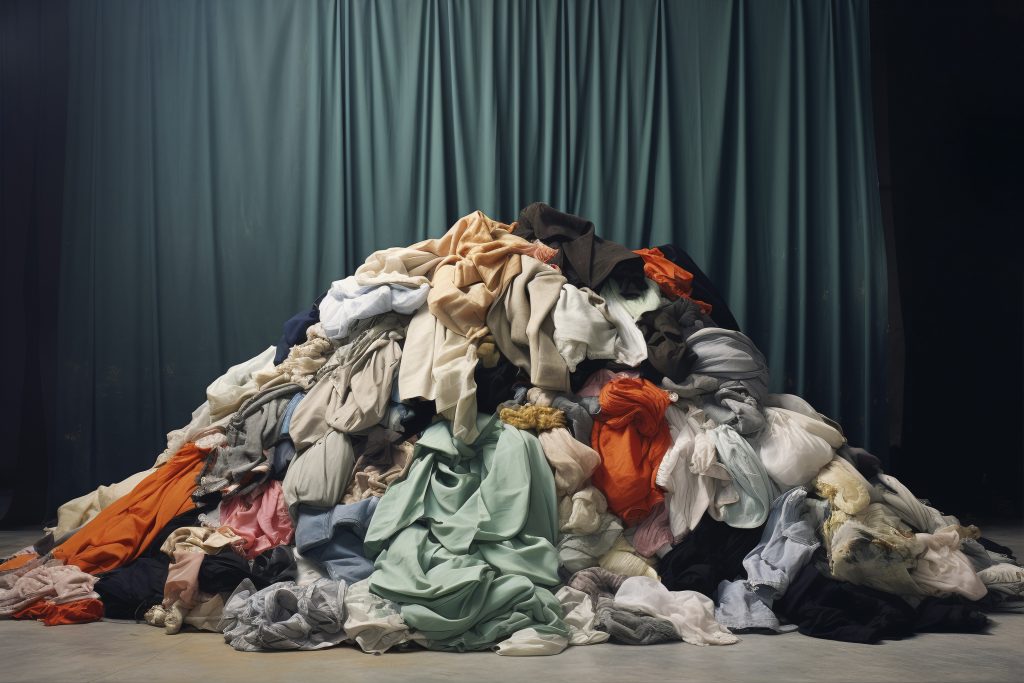
Used textiles containing polyamide represent a source of material that, when the right technical conditions are in place, can be recovered and reintroduced into a new production cycle. This does not, of course, replace essential efforts in terms of durability, repair and reuse.
Recycling comes into play when a product reaches the end of its useful life and can no longer be reused. It can then help recover part of its material value and contribute to a more circular economy.
From the 2025 Ambition to REC in 2026
When this article was published in January 2025, we announced a decisive year to prepare our technology for scale-up. Since then, another milestone has been reached.
Ecollant became REC in 2026 and the company is now based in Joigny, Burgundy-Franche-Comté. This evolution is part of the continuity of the work initiated in 2019. Years of research and development, laboratory experimentation, scale-up work and collaboration with our ecosystem have progressively prepared the project for this new phase.
Today, REC is pursuing its industrial development with a clear ambition: to develop polyamide recycling capacity for complex textiles and materials and contribute to creating a new resource for industry.
Discover REC’s history and journey
2025: One Step in a Larger Journey
With hindsight, 2025 stands out as an important milestone in our development journey. Moving from laboratory development to scale-up enabled us to further secure our technology and prepare the next stages.
But industrialisation is never achieved in a single year. It requires time, investment, technical validation, partners and, above all, the ability to move forward step by step. Laboratory, scale-up, demonstration, industrialisation: each stage prepares the next.
Thank You to Everyone Supporting Us
Since 2019, many of you have supported us throughout this journey: partners, scientists, industrial companies, collection and sorting operators, institutions, funders, customers, employees and members of our ecosystem. Your trust and support are essential drivers that enable us to keep moving forward.
We are convinced that transforming the textile industry will require collective action. It is with this conviction that we continue our work to develop solutions capable of giving new life to the polyamide contained in complex textiles.
A New Year, A New Milestone
In January 2025, we wished you a year full of projects, collaborations and collective achievements. Today, as the project has moved to a new scale and Ecollant has become REC, that ambition remains unchanged.
Keep innovating.
Keep collaborating.
Keep industrialising.
And help transform today’s textile waste into tomorrow’s raw materials.
From the entire REC team, thank you to everyone who has been part of this journey since the beginning.
The story continues.