In February 2025, Ecollant, which became REC in 2026, took part in a meeting dedicated to slow fashion in Dijon. It was an opportunity to discuss the limitations of fast fashion, second-hand, reuse, recycling and the transformations needed to build a more circular textile industry.
2026 update: Ecollant became REC and is continuing its development around the industrial recycling of polyamide contained in complex textiles.
Generation Slow Fashion: Rethinking the Fashion Industry of Tomorrow
In February 2025, we attended the “Generation Slow Fashion” conference held at the Maison Régionale de l’Innovation in Dijon. The event was part of the filming of a documentary produced by Dynamo Production and broadcast by France 3 Bourgogne-Franche-Comté. Beyond the event itself, the meeting gave us an opportunity to take part in a broader discussion about the future of the textile industry:
How can we produce differently?
How can we consume differently?
How can we extend the lifespan of garments?
And what should we do with textiles when they genuinely reach the end of their useful life?
These questions are at the heart of the transformation needed across the textile industry.
Slow Fashion and Fast Fashion: Two Models That Challenge the Way We Think About Clothing
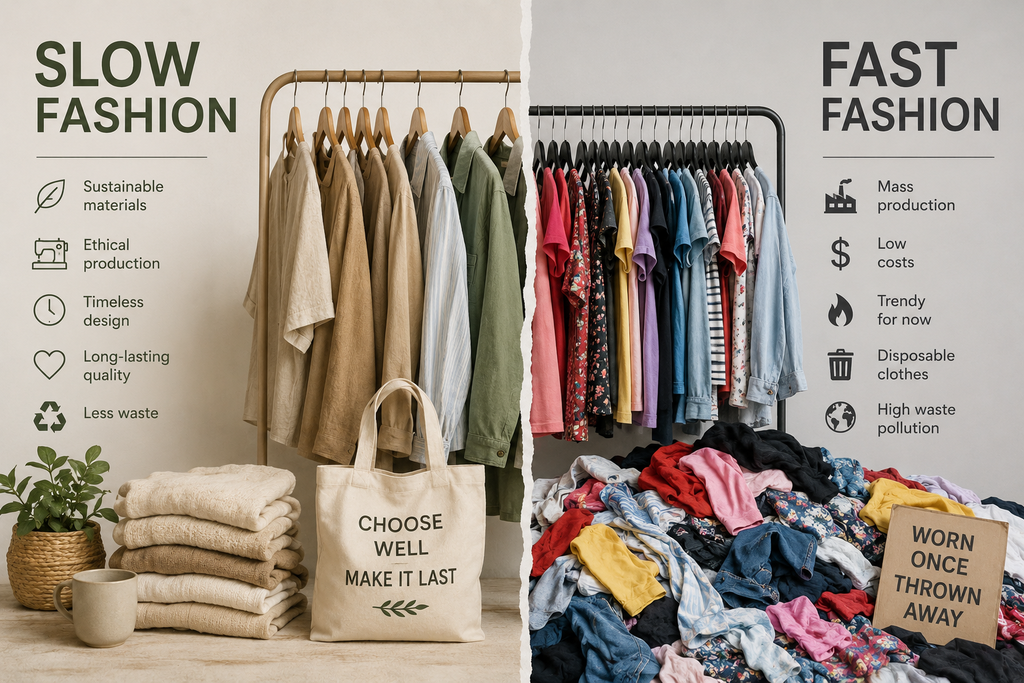
Slow fashion is generally associated with an approach that places greater emphasis on durability, quality, transparency, reduced production volumes and more responsible consumption. It stands in contrast to certain mechanisms of fast fashion, which is characterised in particular by very rapid collection turnover and strong incentives to make new purchases.
But simply opposing fast fashion and slow fashion is not enough to address the textile industry’s environmental challenges. The transformation needs to involve the entire value chain: design → production → distribution → use → repair → reuse → collection → sorting → recycling.
This holistic approach is what makes it possible to genuinely consider textile circularity.
Transparency: Better Understanding What We Buy
One of the key topics discussed during the event was transparency throughout the production chain. For consumers and industry alike, knowing where materials come from, how they are manufactured and under what conditions they are produced helps provide a better understanding of the impacts associated with textile products.
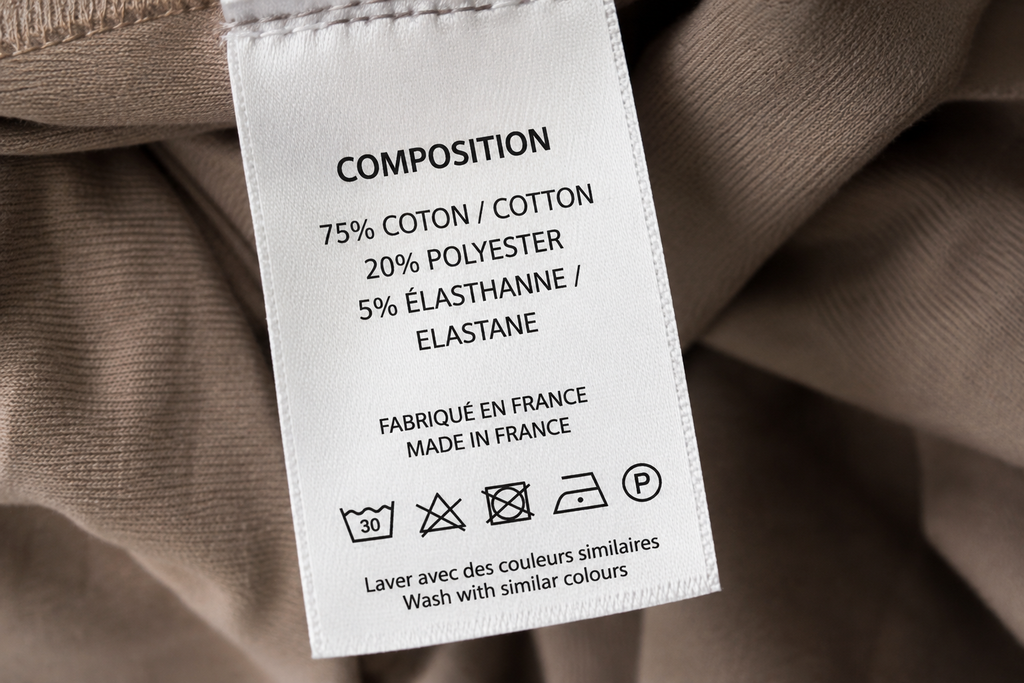
Transparency is also important at end-of-life. Knowing a garment’s exact material composition makes it easier to direct it towards the appropriate collection, sorting, reuse or recycling pathways.
This is particularly important for textiles made from multiple fibers.
Why Recycling Remains Essential
Even in an industry increasingly focused on durability and reuse, not all textiles can be reused indefinitely. Some garments are too worn, damaged or stained, or are technically unsuitable for reuse. Others have a composition or structure that makes their recovery particularly complex.
These textiles must therefore be directed towards appropriate recycling solutions. This is where technological innovation becomes essential.
Developing new recycling technologies can make it possible to recover materials that are currently difficult to valorise.
Complex Textiles: A Challenge for the Circular Economy
Among the textiles that are difficult to recycle are those made from multiple fibers. Tights are a particularly relevant example. They can combine polyamide and elastane, two materials that can be intimately intertwined in the form of filaments. This structure makes separation particularly complex.
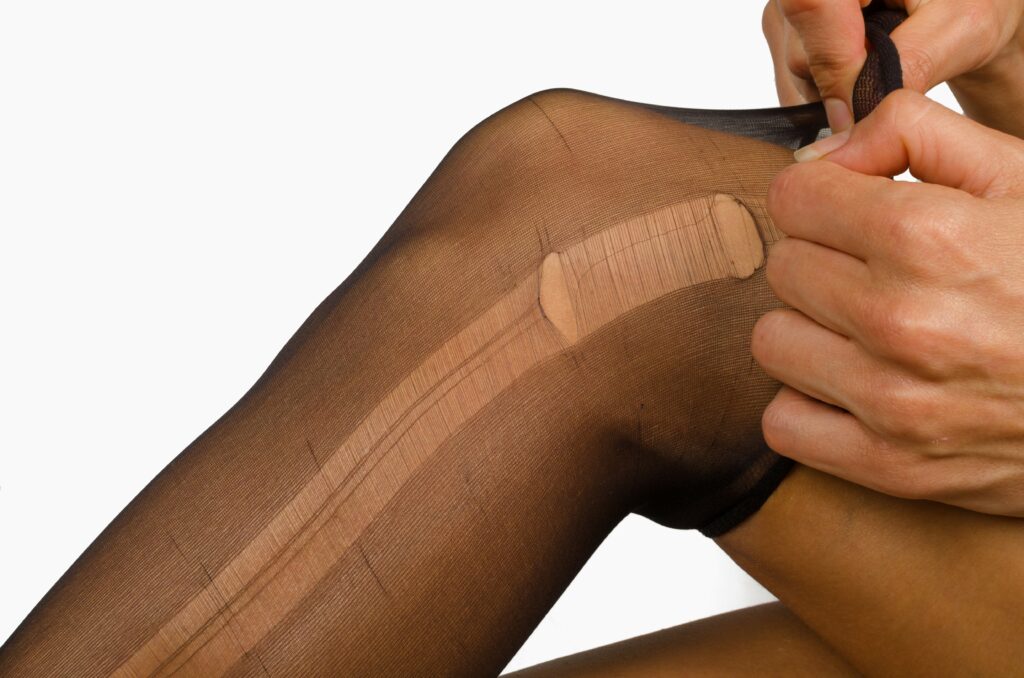
Yet these products contain a material with significant industrial value: polyamide. The challenge is therefore to develop technologies capable of recovering this material and reintroducing it into a new value chain.
REC’s Role in Polyamide Circularity
This is precisely the challenge REC is addressing. Formerly Ecollant, REC is developing a technology to recover and regenerate polyamide contained in complex textiles.
The objective is to transform textiles that are difficult to recover into recycled raw material for new industrial applications. This approach complements reuse and second-hand solutions. It intervenes at another stage of the product lifecycle: when a textile can no longer be reused and needs to be recovered as a material.
Discover REC’s polyamide recycling technology
Innovation as a Driver of Transformation
The discussions during the conference also highlighted an important reality: business models and circular solutions still need to evolve. Second-hand, reuse, eco-design and recycling address different challenges and need to be considered as complementary approaches.
For REC, technological innovation is one of the building blocks required for this transformation. Developing new recycling solutions can, in particular, increase the number of textiles that can retain their material value at the end of their useful life.
Our ambition is therefore not to set recycling against reuse. We want to contribute to building a value chain in which each solution is used at the most appropriate stage of a product’s lifecycle.
Dijon: A Return to REC’s Roots
This meeting also had a special significance for our team. Returning to Dijon meant returning to a region that played an important role during the early years of the project.
It was notably within the regional ecosystem that the Ecollant project received support and developed its first connections with innovation stakeholders. Today, the project continues under the name REC, with an industrial site in Joigny.
This journey illustrates the importance of local ecosystems in supporting industrial Deeptech companies, from the earliest development phases through to industrialisation.
Discover REC’s history and journey
Towards a More Circular Fashion Industry
Slow fashion raises an essential question: How can we change the way we produce and consume clothing?
The answer does not lie in a single technology or a single model. It requires a combination of solutions: durability, eco-design, repair, reuse, second-hand, collection, sorting and recycling.
At REC, we work on this final stage, when a textile reaches the end of its useful life and its material can still be recovered. Our ambition is to help make recycled polyamide a new industrial resource and thereby contribute to building a more circular textile industry.
The fashion industry of tomorrow will not only need to be slower. It will also need to be more durable, more transparent and better able to preserve the value of its materials. 🌍♻️