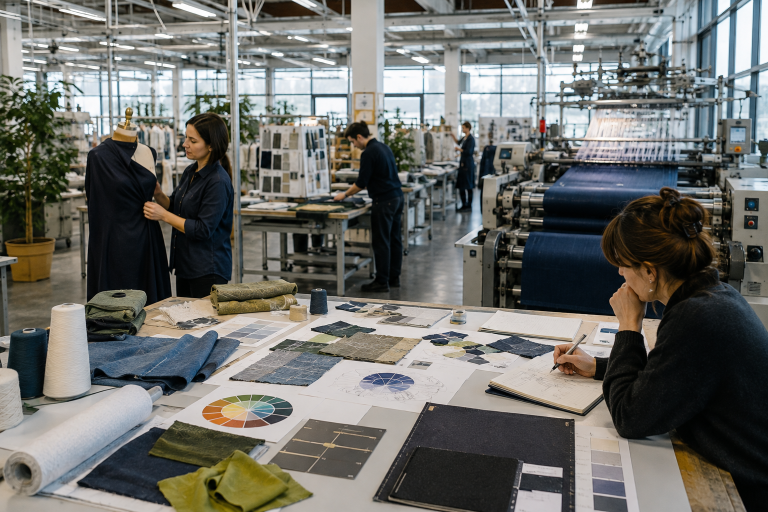
Faced with climate change, international tensions, global competition and the need to reduce the environmental impact of products, the French textile industry must evolve its models. Reindustrialisation, specialisation, cooperation, innovation and the circular economy are among the levers that can help build a more resilient textile industry.
2026 update: This article looks back at a meeting held in Lyon in 2025. Since then, Ecollant has become REC and continues its industrial development around the recycling of polyamide contained in complex textiles.
A French textile industry undergoing major transformation
The French textile industry has been evolving for several decades in response to economic and technological changes. The relocation of part of production, the opening of international markets, changing consumer habits and digitalisation have profoundly transformed the sector.
Today, new challenges are accelerating this transformation:
- climate change;
- reducing environmental impact;
- dependence on raw materials;
- geopolitical tensions;
- international competition;
- evolving regulations;
- changing consumer expectations;
- industrial decarbonisation;
- development of the circular economy;
- the need to strengthen industrial sovereignty.
Faced with these challenges, French textile companies must develop new models to remain competitive while responding to environmental and industrial transformations.
Why does the textile industry need to transform ?
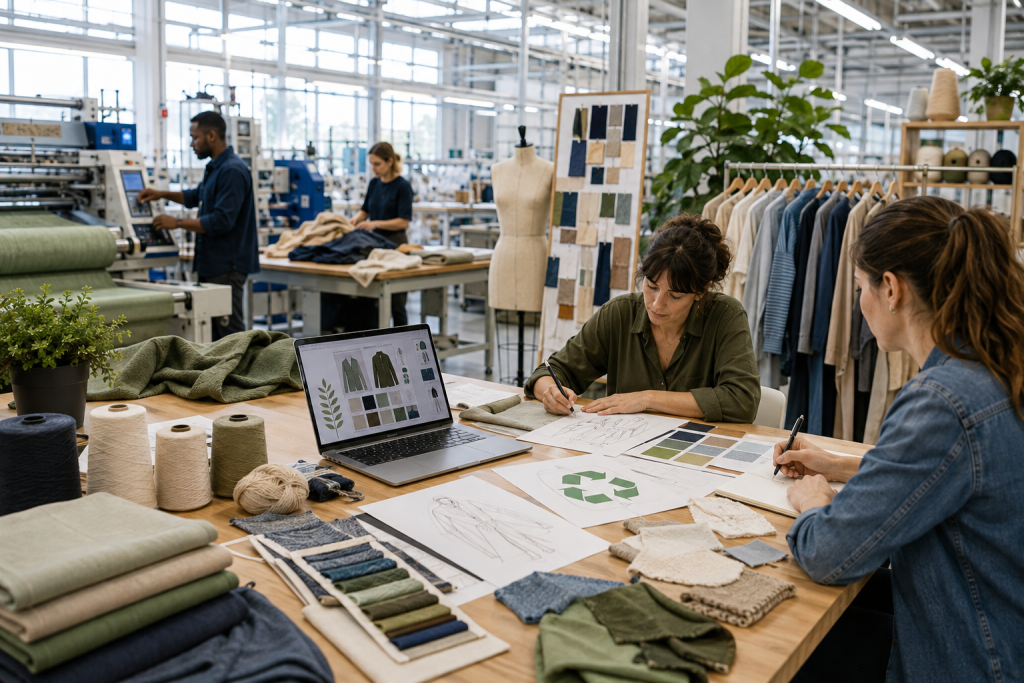
The transformation of the textile industry does not only concern clothing manufacturers. It affects the entire value chain:
raw materials → spinning → weaving or knitting → finishing → garment manufacturing → distribution → use → collection → sorting → reuse → recycling.
Each stage faces its own specific challenges. Moving towards a more circular economy therefore requires rethinking the entire value chain rather than looking for a single solution. This is why exchanges between manufacturers, recyclers, collectors, technical centres, clusters and institutions are so important.
Ecollant in Lyon: reflecting on the future of textiles
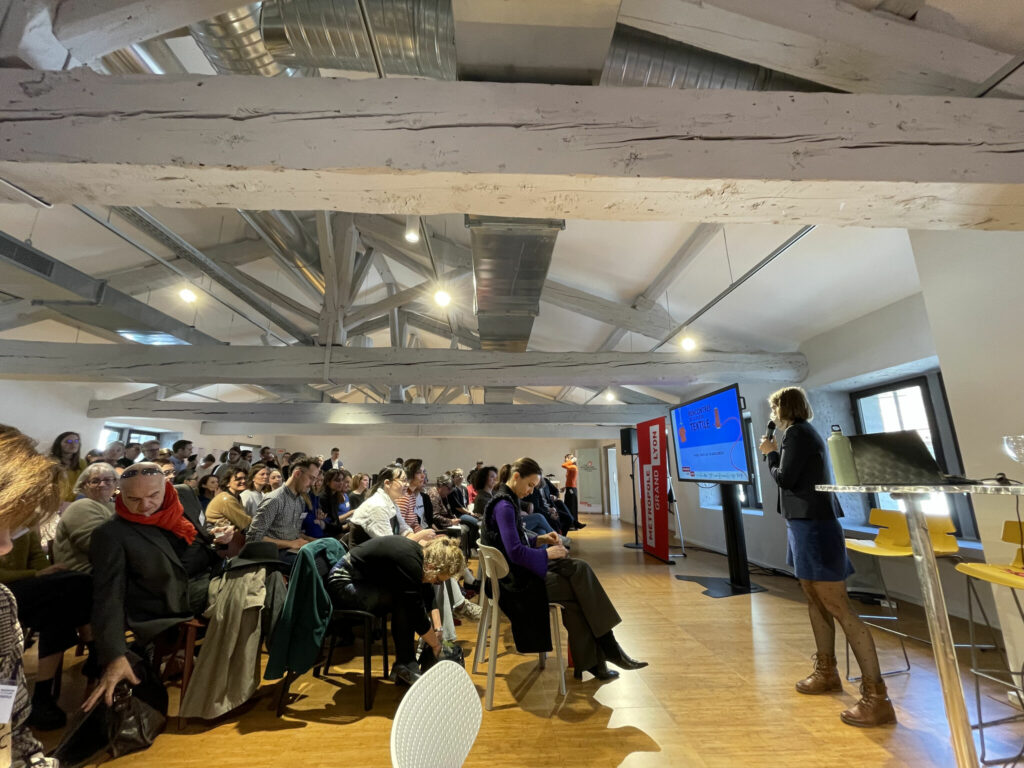
In 2025, the Ecollant team attended an event at the Cité Internationale de la Gastronomie de Lyon, bringing together numerous stakeholders from the textile industry. The meeting aimed to explore strategies that could help the French textile industry better address economic, environmental and geopolitical changes.
The event brought together manufacturers, collection and recycling operators, as well as several organisations from the textile ecosystem. For Ecollant, which became REC at the end of 2025, these discussions were particularly relevant: our project sits at the intersection of several transformations within the industry, with the development of an industrial solution for recycling polyamide contained in complex textiles.
The major challenges facing the French textile industry
Several topics structured the discussions during the event.
Strengthening industrial resilience
Successive crises have highlighted the limitations of excessive dependence on long and globalised supply chains. For some companies, this may lead to seeking greater proximity to suppliers, diversifying sourcing or relocating certain stages of production. The objective is not necessarily to produce everything locally, but to build more resilient and better-controlled value chains.
Focusing on specialisation
Faced with international competition, French manufacturers cannot always compete solely on costs. Specialisation, expertise, quality, innovation and the ability to develop differentiated products are therefore important levers.
France has a strong ecosystem of SMEs, mid-sized companies, technical centres, laboratories and startups capable of developing specialised technological solutions.
Cooperating rather than working in silos
Another major challenge is cooperation between stakeholders. Transforming the textile industry requires bringing together companies that do not necessarily have a history of working together. Manufacturers, recyclers, collectors, sorters, spinners, technical centres, equipment manufacturers, researchers and institutions can therefore build joint projects.
For REC, this cooperation is particularly important. Polyamide recycling requires connecting several links in the value chain:
collection → sorting → textile preparation → recycling → recycled material production → industrial use.
Discover the collection of textiles containing polyamide
Excellence or simplification?
One of the questions raised during the discussions concerned the positioning of manufacturers: Should companies always strive for greater excellence, or should they simplify certain activities to remain competitive?
The answer obviously depends on the markets and the companies involved. Some players may focus on high added value and specialised products. Others may seek to simplify their processes, improve productivity or pool certain functions.
In all cases, the objective remains the same: to build an industrial model capable of creating enough value to remain competitive in an evolving global environment.
Specialisation or scaling up ?
Scale is also a key issue. Some markets require significant volumes to achieve economic competitiveness. Others rely more on specialised production, small batches or specific expertise. Industrial recycling faces the same challenge. To develop a new recycling industry, it is necessary to reach a sufficient scale to:
- process significant volumes;
- optimise costs;
- secure supply;
- ensure consistent quality;
- meet the needs of industrial users.
This is precisely one of the challenges involved in the scale-up of REC’s technology.
Discover the role of the industrial pilot in scaling up
In-house production or cooperation ?
Not every company can, or needs to, internalise every activity. Cooperation can make it possible to pool skills, equipment, expertise or resources.
In an industry undergoing transformation, partnerships therefore become a genuine development lever. For a DeepTech company like REC, collaboration is essential at several levels: research, technological development, collection, material preparation, industrialisation and commercial outlets.
The circular economy as a driver of reindustrialisation
The ecological transition should not be viewed solely as a constraint for industry. It can also create new industrial opportunities. The development of recycling value chains can transform waste into resources and create new activities around their collection, preparation, processing and reuse.
Polyamide recycling fits directly into this approach. Textiles that currently reach the end of their useful life can potentially become a source of secondary raw material for industry. The challenge is therefore both environmental and industrial.
Polyamide recycling: one building block of this transformation
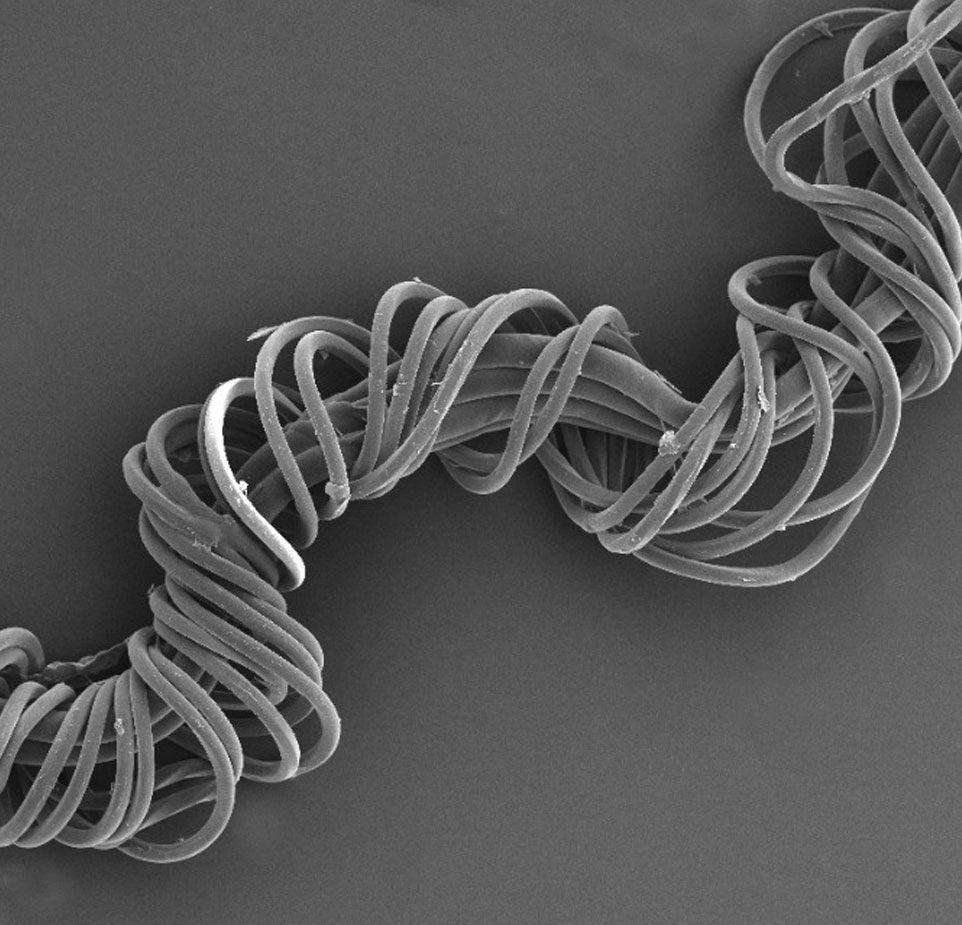
Polyamide is used in many textile and industrial applications. However, some products containing polyamide are particularly difficult to recycle when they combine several fibres. This is notably the case for certain tights, lingerie and technical garments, which may combine polyamide and elastane.
REC is developing a technology capable of recovering and regenerating the polyamide contained in these complex textiles, in order to produce recycled material for new industrial applications. The technology therefore aims to address one of the key challenges of textile circularity:
How can we recover materials from products that can no longer be reused and whose fibres are difficult to separate?
Discover REC’s polyamide recycling technology
A transformation that requires the entire industry
One of the key takeaways from this event is clear: the future of the French textile industry cannot be built by a single type of stakeholder. It will require cooperation between:
- manufacturers;
- brands;
- spinners;
- recyclers;
- collectors;
- sorters;
- technical centres;
- DeepTech startups;
- researchers;
- institutions;
- local and regional stakeholders.
Each stakeholder holds part of the solution. The ability to connect these different areas of expertise will be decisive in accelerating the transformation of the industry.
From Lyon to Joigny: REC’s industrial journey
This meeting in Lyon took place during an important period in Ecollant’s development. Since then, the project has evolved. Ecollant became REC at the end of 2025 and the company is now based in Joigny, in the Bourgogne-Franche-Comté region.
This industrial site is part of our ambition to take our technology from development to genuine industrial-scale capacity.
Discover REC’s history and development
What will the French textile industry look like tomorrow?
There is probably no single strategy capable of addressing all the challenges facing the French textile industry. The future will instead rely on a combination of levers: innovation + specialisation + cooperation + reindustrialisation + circular economy.
The challenge is to build an industry that is both competitive and resilient, while progressively reducing its dependence on virgin resources. For REC, this transformation includes the development of an industrial polyamide recycling value chain. But it also requires working with all the stakeholders involved in transforming the textile industry.
Together, we can build a more resilient, more circular French textile industry that is better prepared for the challenges of tomorrow.