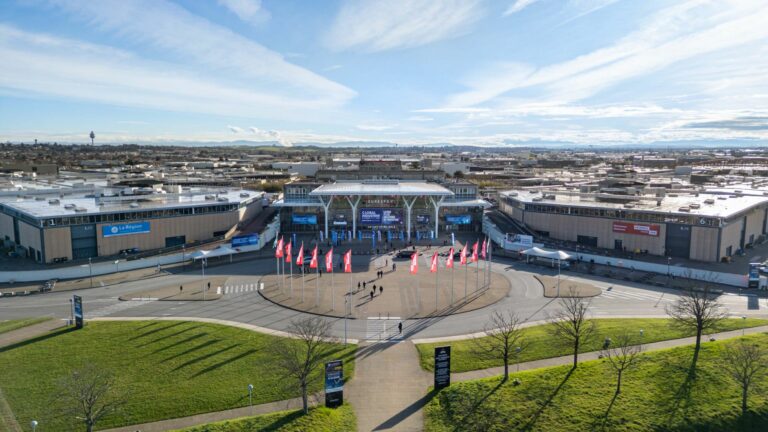
After four days at Global Industrie 2025, Ecollant looks back at the key takeaways from an event focused on the transformation of French industry. Reindustrialization, the circular economy, innovation and the scale-up of industrial startups were at the heart of the discussions. This is a dynamic that REC is now part of, with the industrial development of its polyamide recycling technology.
2026 update: Ecollant became REC at the end of 2025. The company is now pursuing its industrial development from its site in Joigny, with the ambition of scaling up its polyamide recycling technology to an industrial level.
Global Industrie 2025: four days at the heart of industrial transformation
In March 2025, we took part in Global Industrie, one of France’s leading industrial events. Over four days, we exchanged with manufacturers, Deeptech startups, local authorities, institutions and industrial ecosystem stakeholders around one central question: How can we build the French industry of tomorrow?
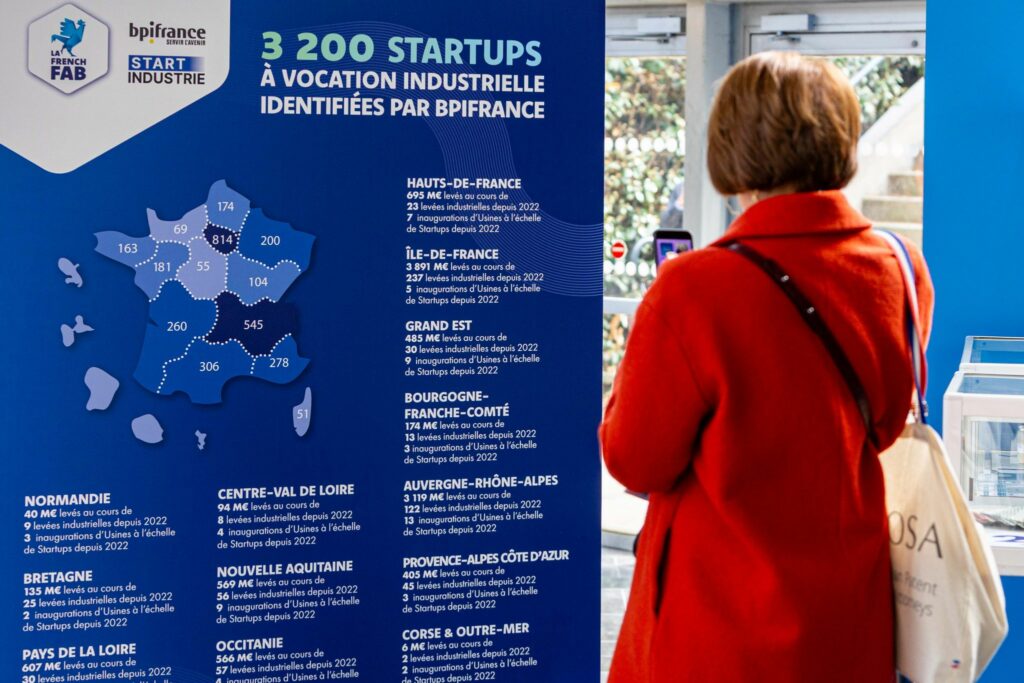
For us, this question is directly connected to our own journey. Developing a recycling technology in the laboratory is only the first step. The real challenge then lies in turning it into an industrial solution capable of operating at a larger scale.
An industry on the front line
One of the key messages that particularly stood out to us during this edition was the role of industry in the transformations currently reshaping our economy. Industry is directly impacted by several major challenges:
- the reindustrialization of local economies;
- the ecological transition;
- decarbonization;
- industrial sovereignty;
- securing supply chains;
- technological innovation;
- the creation of new industrial sectors.
These transformations require investment, skills and new technologies. They also require us to rethink the way we produce and consume raw materials.
The circular economy is becoming an industrial challenge
One of the key takeaways from this edition of Global Industrie was the growing importance of the circular economy in industrial strategies. Recycling is no longer viewed solely as a waste management issue.
It is also becoming a question of supply, raw materials, sovereignty and industrial competitiveness.
Recycling an existing material makes it possible to create a secondary raw material that can be reintroduced into new production chains. This approach is particularly important for materials whose supply currently relies heavily on virgin resources.
Why is polyamide recycling an industrial challenge?
Polyamide, also known as nylon, is used in a wide range of textile and industrial applications. However, some products containing this material are particularly difficult to recycle when polyamide is combined with other fibres. This is notably the case for:
- tights;
- lingerie;
- sportswear;
- technical textiles;
- other complex materials containing polyamide.
The challenge is to recover the polyamide without losing its material value. This is precisely the technological barrier that REC is working to overcome.
Discover REC’s polyamide recycling technology
From textile waste to secondary raw material
The aim of industrial recycling is not simply to divert waste from landfill or incineration. It is to recover the material it contains and enable it to enter a new industrial cycle. For REC, the process can be summarized as follows: complex end-of-life textile → polyamide recovery → regeneration → recycled material → new industrial application.
This approach helps shift from a linear model: extract → produce → consume → dispose
towards a more circular model: produce → use → collect → recycle → reuse the material.
The challenge of industrial scale-up
For an industrial startup, one of the main challenges is moving from a prototype or a process validated at small scale to industrial production. This is known as scale-up. This stage involves addressing new challenges, including:
- increasing volumes;
- equipment sizing;
- process stability;
- reproducibility;
- material flow management;
- industrial costs;
- maintenance;
- quality of the material produced;
- safety;
- regulatory requirements.
Scaling up therefore does not simply mean “doing more”. It means adapting a technology to the real-world constraints of industry.
Why is a pilot plant an essential step in the scale-up process?
The importance of industrial ecosystems
Global Industrie also provided an opportunity to see once again that industrialization rarely happens through the efforts of a single company. It requires an ecosystem made up of:
- industrial partners;
- technology suppliers;
- local authorities;
- technical centres;
- laboratories;
- investors;
- institutions;
- customers;
- collection and recycling stakeholders.
Our discussions with organizations such as Bpifrance, La French Fab, Start Industrie, ADEME and local authorities illustrate the importance of working collectively. For an industrial Deeptech company, these networks can play a decisive role in moving from technological development to industrialization.
The circular economy as a new industrial opportunity
The circular economy can also become a driver for the creation of new activities. Collecting, sorting, preparing and transforming waste, and producing new materials requires infrastructure, equipment, skills and jobs.
The development of recycling can therefore contribute to the creation of new industrial value chains. In the textile sector, this includes collection and sorting operators, material preparation specialists, recyclers, processors and manufacturers capable of incorporating recycled materials.
Discover how REC collects textiles containing polyamide
Global Industrie: discussions that reinforce our trajectory
This edition of Global Industrie reinforced one of our key convictions: industrial transformation requires us to bring together innovation, industry and the circular economy. For REC, this means progressively industrializing our polyamide recycling technology.
Our objective is to process increasing volumes of complex textiles and produce recycled material that meets the requirements of the targeted industrial applications.
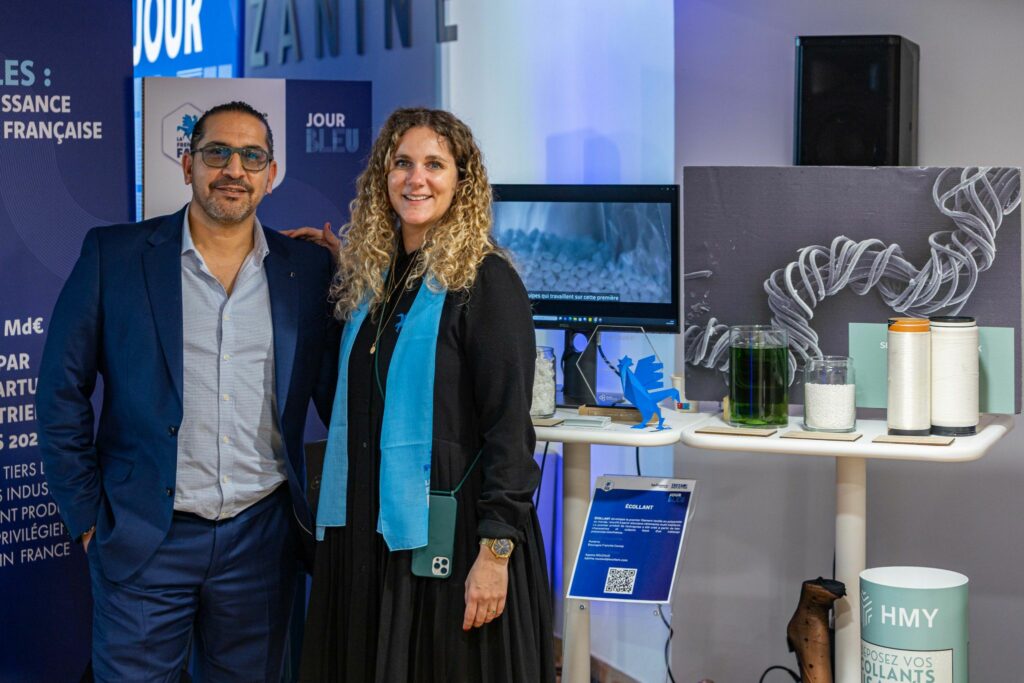
From Global Industrie 2025 to REC in 2026
In 2025, we attended the show under the name Ecollant. Since then, we have taken another major step forward. Ecollant became REC in 2026, and the company is now pursuing its industrial development in Joigny, in the Bourgogne-Franche-Comté region.
Our ambition remains unchanged: to contribute to the development of an industrial sector capable of transforming complex waste containing polyamide into new resources for industry.
Discover REC’s history and development
Building the circular industry of tomorrow
Global Industrie 2025 gave us another opportunity to appreciate the scale of the transformations currently underway in French industry. Reindustrialization, innovation, sovereignty, decarbonization and the circular economy are not independent issues. They are becoming increasingly interconnected.
For REC, polyamide recycling lies precisely at this intersection. Transforming textile waste into new raw materials is both an environmental challenge and an opportunity to build new industrial capabilities in France.
This is the ambition we are pursuing today in Joigny. 🚀♻️
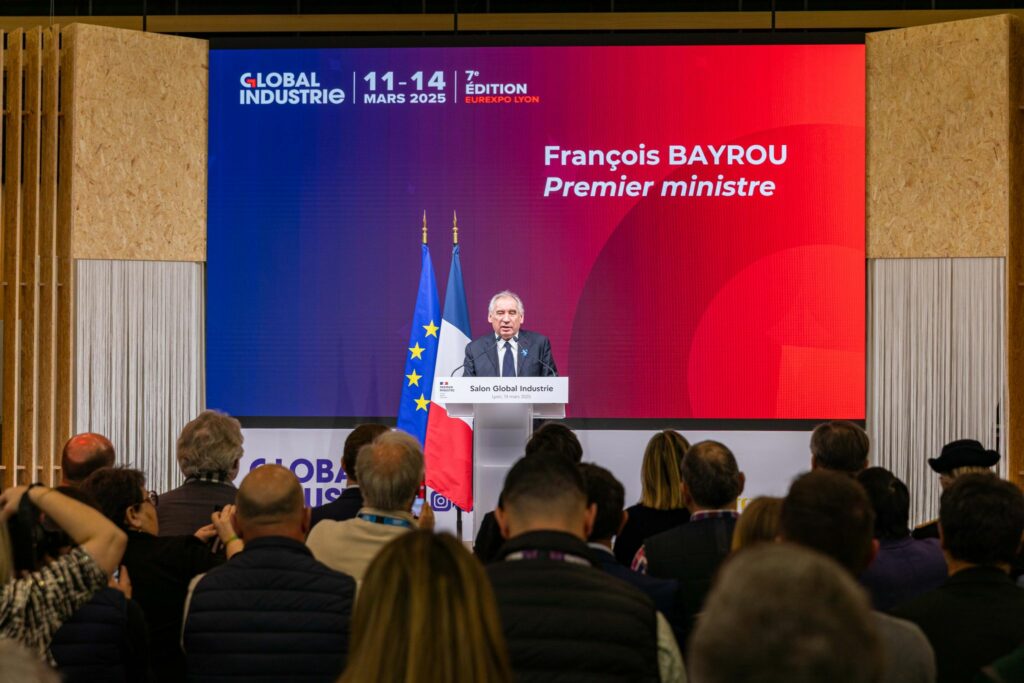
Photo credits: Alexandre Badot and Start Industrie.