In 2025, the Ecollant team welcomed the Dynamo Production team to AuxR_Lab for the filming of a documentary dedicated to the transformation of the textile industry. It was an opportunity to show, in practical terms, how a recycling technology can transform complex textiles into new resources. Since then, Ecollant has become REC, and the company has continued its industrial development in Joigny.
2026 update: Ecollant became REC at the end of 2025. The company is now based in Joigny and is continuing to industrialize its technology for recovering and regenerating polyamide contained in complex materials.
A documentary about the future of textiles and textile recycling
Following our participation in the “Génération Slow Fashion” conference in Dijon, we were pleased to welcome Pauline Pelsy-Johann, the Dynamo Production team and France 3 Bourgogne-Franche-Comté. The filming was part of the production of a documentary exploring the transformation of the textile industry and solutions for developing more responsible fashion.
This time, it was not simply about discussing the future of textiles. It was about showing what actually happens when an innovation moves from an idea to experimentation.
From ideas to experimentation
At the Génération Slow Fashion conference, discussions focused in particular on fast fashion, second-hand clothing, reuse and ways to make the textile industry more circular. At AuxR_Lab, we were able to showcase another stage in this transformation: research and development of new recycling solutions for complex textiles.
While reuse and repair are essential for extending the lifespan of clothing, some products inevitably reach the end of their useful life. When these textiles can no longer be reused, the challenge then becomes one of material recovery.
This is precisely the issue REC is working to address.
The laboratory: an essential step towards industrialization
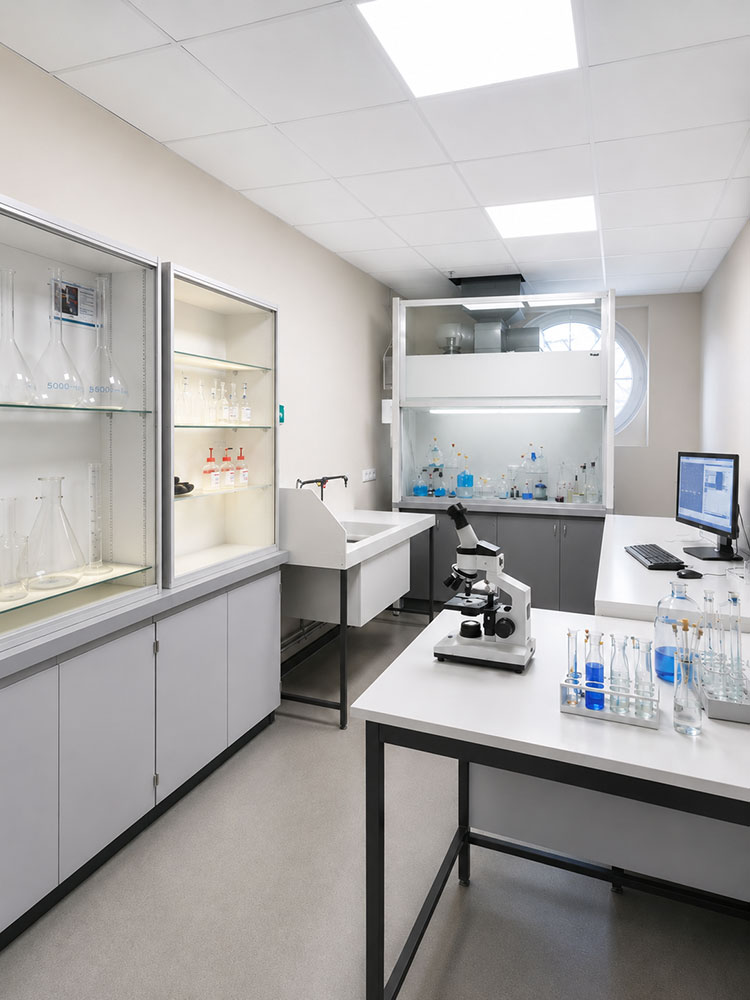
An industrial recycling process is not developed directly at factory scale. It starts with research, testing and optimization in the laboratory. The laboratory phase makes it possible to:
- understand how materials behave;
- test different processing conditions;
- optimize process parameters;
- analyze the recovered material;
- identify process limitations;
- progressively prepare for scale-up.
This phase is essential for turning a scientific hypothesis into a reproducible industrial process. At REC, R&D is therefore a fundamental part of our industrialization journey.
A textile recycling technology ready to scale up
Laboratory work is only one step in the process. An industrial Deeptech technology must then demonstrate its ability to operate with larger volumes. This is the purpose of scale-up.
It is necessary to verify that laboratory performance can be reproduced when:
- material volumes increase;
- equipment evolves;
- material flows become larger;
- process parameters interact differently;
- industrial constraints emerge.
This progression gradually leads from the laboratory to the demonstrator stage and ultimately to industrialization.
Read our article on the industrial pilot and scale-up
From AuxR_Lab to Joigny: an industrial journey
When this filming took place in 2025, the project was still being developed under the name Ecollant, and AuxR_Lab was one of the places associated with its early development. Since then, a new milestone has been reached.
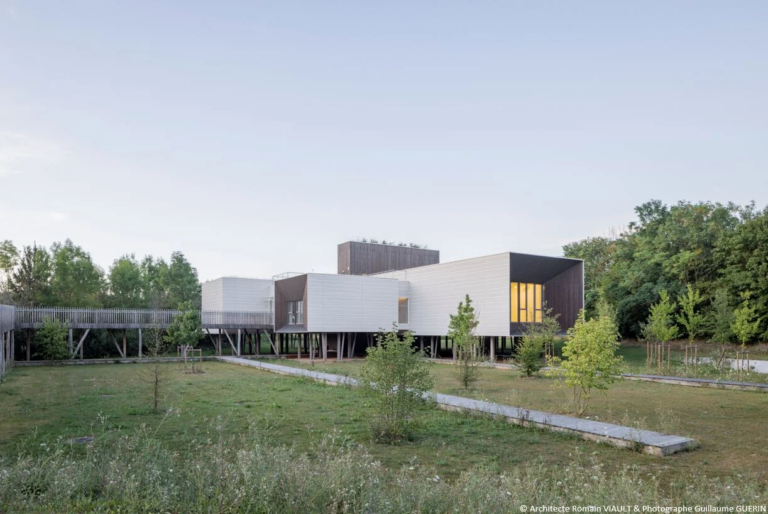
Ecollant became REC at the end of 2025, and the company is now based in Joigny. The laboratory remains an essential part of this journey, but the objective is now clearly industrial: to scale the technology so that significant volumes of textile waste can be processed and recycled material can be produced to meet industrial requirements.
Discover REC’s history and development
When science meets industry
The filming at AuxR_Lab ultimately provided a good illustration of what defines an industrial Deeptech. Behind a recycling technology are scientific research, laboratory testing, engineering, material collection, analysis, industrial partnerships and, progressively, production capabilities.
Innovation does not stop at developing a process. It must be reproducible, scalable and integrated into a genuine industrial value chain. This transformation is at the heart of REC’s development today.
A new step for textile recycling
Recycling complex textiles remains a major challenge for the industry. However, the development of new technologies is gradually opening up new possibilities for material recovery. At REC, we are working to ensure that textiles that are difficult to recycle today can become sources of recycled polyamide for new production tomorrow.
The journey from laboratory to industry is long, demanding and collective. But it is precisely this process that makes it possible to transform a technological innovation into a concrete industrial solution for the circular economy.